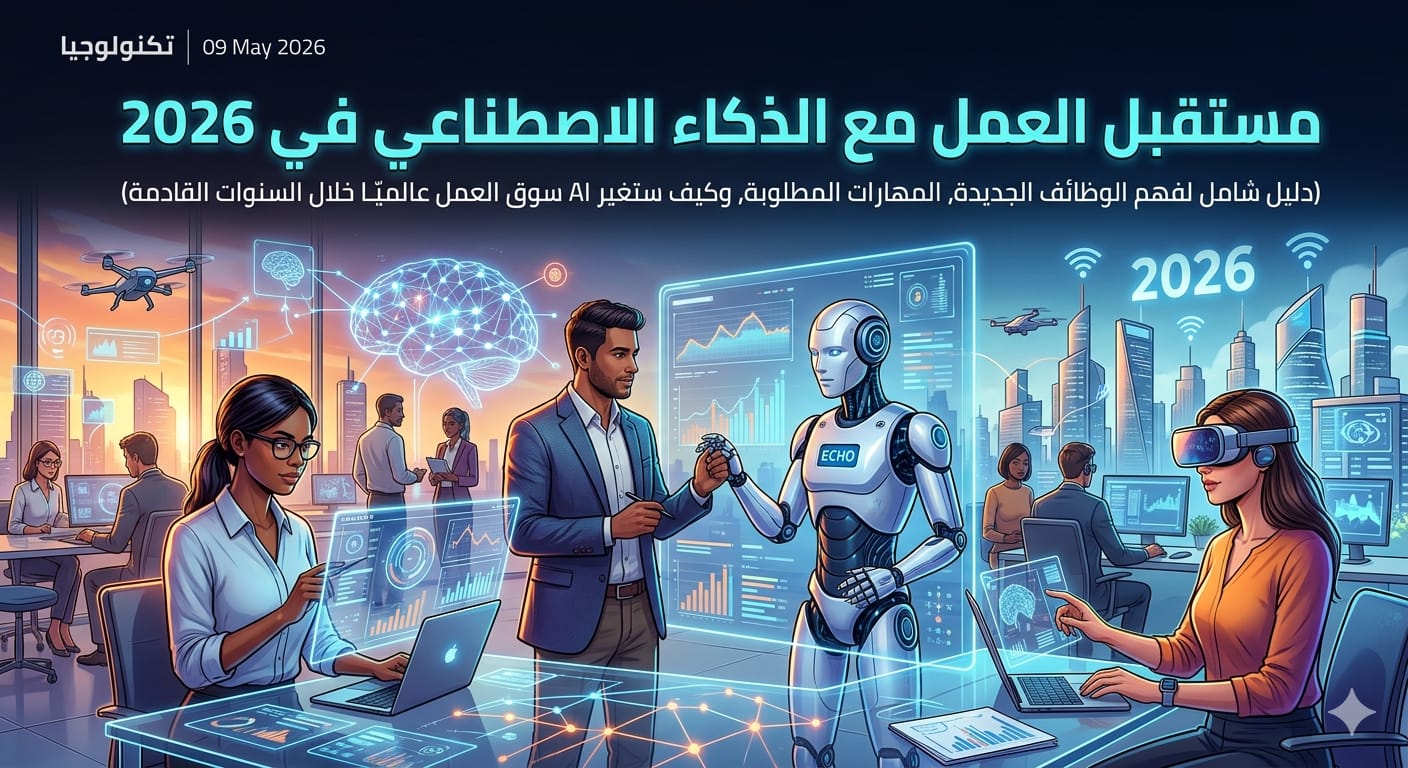
AI's Impact on the Job Market: What to Expect by 2030
Technology
The job market is undergoing a major transformation with the advancement of technology and the spread of artificial intelligence (AI). The potential impact of AI on jobs raises many questions about the future of the labor market.
By 2030, the job market is expected to undergo radical changes as a result of technological developments. Sectors that will be significantly affected include customer service and education, where some jobs will be replaced by robots and intelligent software.

It is important to understand the potential impacts of artificial intelligence on various industries and sectors to ensure that the labor market is prepared for upcoming changes.
Key Takeaways
- Impact of artificial intelligence on customer service jobs
- The future of educational jobs in the era of intelligent automation
- Expected changes in the labor market by 2030
- Sectors most affected by artificial intelligence
- The importance of preparing for upcoming changes in the labor market
2030 Forecast: Which Jobs Will Change Due to Artificial Intelligence?
The labor market is undergoing a major transformation due to advancements in artificial intelligence. Which jobs will be affected? As technology progresses, it becomes essential to understand how AI will reshape the global labor market.
Overview of Digital Transformation in the Labor Market
The labor market is experiencing significant digital transformation, with many traditional jobs being replaced by advanced technology. This transformation is not limited to manufacturing industries but also includes service and office sectors.
Digital transformation does not only mean replacing human labor with machines, but also improving processes and providing more efficient services.
Technology Experts’ Statistics and Predictions
According to technology expert reports, it is expected that nearly 30% of current jobs will be affected by artificial intelligence by 2030.
Statistics indicate that some jobs will disappear entirely, while others will change to include new tasks requiring advanced technical skills.
Jobs Most Vulnerable to Change by 2030
Among the jobs that will be significantly affected:
- Data entry jobs
- Secretarial and office tasks
- Customer service
These jobs will require retraining and developing new skills to align with modern technology.
How Artificial Intelligence is Reshaping the Global Labor Market
The rapid development of artificial intelligence is reshaping the global labor market, with advanced technology now able to perform tasks previously reserved for humans. This shift affects not only industry but also service and administrative sectors.
Global Trends in Job Automation
Studies indicate that job automation will continue to increase over the next decade, with varying impacts across sectors. According to a report from the World Economic Forum, by 2025 there will be a major shift in the distribution of tasks between humans and machines.
- Increased reliance on robots in manufacturing.
- Expansion of AI systems in the service sector.
- Improved administrative process efficiency through automation.
Impact of Artificial Intelligence on Labor Economics
Artificial intelligence affects not only the nature of jobs but also labor economics in general. It can increase productivity but may also lead to the loss of some traditional jobs.
It is expected that AI developments will create new job opportunities, but they will require advanced skills and continuous adaptation.
Industries Likely to Experience the Biggest Professional Transformation by 2030
Some industries will undergo significant transformations due to AI developments, including:
- Manufacturing: with increased automation and process optimization.
- Financial services: financial technology will bring radical changes.
- Transportation and logistics: with the emergence of self-driving vehicles and smart shipping technologies.
In conclusion, it is crucial for workers in the global labor market to adapt to these changes by acquiring new skills and developing capabilities to keep pace with technological advancements.
Office and Administrative Jobs: Most Vulnerable to Change
Amid the rapid advancement of artificial intelligence, office and administrative jobs will undergo significant changes. Jobs that were once considered stable and secure now face major challenges due to advanced technology.
Decline of Data Entry and Secretarial Jobs
Data entry and secretarial jobs are among the office positions that will be heavily impacted by AI development. Modern technology can perform these tasks faster and more accurately than humans.
Advanced software can now automatically process and input data, reducing the need for human employees in these areas.
Office Professions Likely to Decline Due to Automation by 2030
By 2030, many office professions are expected to decline due to automation. Jobs such as data processing, secretarial work, and customer service may disappear or change significantly.
- Decline in data entry jobs
- Automation’s impact on secretarial jobs
- Changes in customer service jobs
How to Develop Skills to Adapt to Changes
To adapt to changes affecting office and administrative jobs, employees must develop new skills, including:
- Learning to use modern technology
- Developing analytical skills
- Improving communication skills
As noted by
economist: "Adapting to new technology is not optional but a necessity to ensure survival in the changing labor market."
The Future of the Financial and Accounting Sector in the Age of AI
The future of accounting and finance is heavily influenced by AI advancements, with the financial and accounting sector undergoing a major transformation with the spread of modern technology.
Will Traditional Accounting Tasks Disappear Before 2030?
With the advancement of AI, there are concerns that many traditional accounting tasks may disappear. Technology can automate routine accounting processes such as data entry and account reconciliation.
As noted by
economist John Smith
"Artificial intelligence will radically change how financial and accounting functions are performed."
Digital Transformation in Banking and Finance
Banking and financial services are undergoing major digital transformation. Financial technology provides new opportunities to improve services and offer advanced banking solutions.
- Mobile banking applications
- Digital payment systems
- Automated financial advisory
Future Financial Skills Required
In light of technological advancements, there will be a need for advanced financial skills. The ability to handle and analyze data will be one of the essential skills required.
| Required Skills | Description |
| Data Analysis | Ability to analyze financial data and provide recommendations |
| Analytical Thinking | Ability to solve complex financial problems |
AI’s Impact on Customer Service Jobs
Artificial intelligence is fundamentally changing customer service roles through advanced technology. This change not only improves efficiency but also enhances the overall customer experience.
Chatbots and Automated Response Systems
Chatbots and automated response systems have become essential in customer service in many companies. These technologies provide instant responses to customer inquiries, reducing the need for human intervention in many cases.
The following table shows some differences between chatbots and human automated responses:
| Feature | Chatbots | Human Automated Response |
| Response Speed | Instant | Variable depending on time |
| Cost | Low in the long run | High due to employee costs |
| Accuracy of Information | High if properly programmed | Variable depending on employee knowledge |
Future of Call Centers and Technical Support
With AI advancement, call centers and technical support are expected to undergo major changes. Some routine tasks may be automated while focus shifts to tasks requiring human interaction.
Customer Experience in the Era of Automation
Customer experience will see significant improvement thanks to automation. Chatbots will provide fast and accurate responses, enhancing customer satisfaction.
In conclusion, AI’s impact on customer service jobs will be substantial, with many tasks transitioning to automated systems, opening the door for improved customer experience and reduced operational costs.
AI is Changing the Role of Human Resources Employees
AI is revolutionizing human resources, with HR roles being fundamentally changed. With AI technologies, companies can improve recruitment and selection processes, analyze employee data, and manage performance more efficiently.
Automating Recruitment and Selection Processes
Recruitment and selection processes have become more efficient thanks to AI. Companies can now use advanced systems to analyze job applications, classify candidates, and conduct virtual interviews.
- Analyze job applications using AI
- Classify candidates based on specific criteria
- Conduct virtual interviews using chatbots
Employee Data Analysis and Performance Management
AI allows companies to analyze employee data more deeply, helping improve performance management and employee development.
Some applications include:
- Analyze employee performance using historical data
- Identify areas for employee development
- Provide recommendations to improve performance
Human Aspects That Cannot Be Automated
Despite AI’s ability to automate many processes, some human aspects cannot be replaced by technology. Human interaction, creativity, and empathy remain crucial in the role of HR employees.

The Future of Educational Jobs in the Era of Intelligent Automation
How will the role of teachers change in the age of artificial intelligence? This question arises strongly amid current technological developments. In this section, we will discuss the impact of AI on educational jobs, focusing on the teacher’s role and smart learning platforms.
The Teacher’s Role Between Traditional and Digital
Modern technology has made it possible for teachers to use advanced teaching methods, such as educational software and online interaction with students. Nevertheless, the teacher’s role remains essential in the educational process.
As it is said:
"Education is what remains after one has forgotten everything he learned in school" - Albert Einstein
This highlights the importance of the teacher’s role in shaping and guiding the student’s personality.
Smart Learning Platforms and Their Impact on Education
Smart learning platforms have become very popular in recent years. These platforms provide students with opportunities to learn in interactive and engaging ways.
- Provide customized educational content for students.
- Facilitate interaction between students and teachers.
- Accurately assess students’ performance.
Skills of the Future Teacher
With technological advancement, teachers will need to develop their skills to keep up with changes. Some skills that teachers will need in the future include:
| Skill | Description |
| Technology Use | Ability to use educational software and interact with students online. |
| Creative Thinking | Ability to create new and innovative teaching methods. |
| Effective Communication | Ability to communicate effectively with students and parents. |
As shown in the table above, teachers will need a broad set of skills to adapt to changes in the field of education.
Healthcare Sector: Jobs Transforming and Growing Due to Artificial Intelligence
The healthcare sector is undergoing a significant transformation thanks to AI advancements. This transformation not only changes traditional jobs but also opens the door for new opportunities in digital healthcare.
Automation in Diagnostics and Medical Procedures
Artificial intelligence has become an integral part of medical diagnostics, helping analyze medical images and provide accurate diagnoses. It also plays a role in improving medical procedures and making them more efficient.
Applications of AI in Diagnostics:
- Medical image analysis
- Diagnosis of chronic diseases
- Predicting potential diseases
New Jobs in Digital Healthcare
With technological development, new jobs are emerging in the digital healthcare field. These jobs include:
| Job | Description |
| Medical Data Specialist | Responsible for analyzing medical data to improve healthcare. |
| Medical App Developer | Develops applications that support remote healthcare. |
| Health Technology Consultant | Assists in applying technology to enhance healthcare services. |
The Future Relationship Between Doctors and Technology
As AI advances, the relationship between doctors and technology will change. Doctors will increasingly rely on smart tools for diagnosing and treating patients.
Technology will not replace doctors but will serve as an assisting tool for them.
Transportation and Delivery Jobs Between Automation and Modern Robotics
The future of transportation and delivery is being reshaped by automation and robotics. This transformation is driven by advancements in artificial intelligence and robotics, which are increasingly being adopted in the transportation and logistics sectors.
The Future of Drivers in the Era of Self-Driving Vehicles
The rise of self-driving vehicles is expected to significantly impact the driving profession. With the ability to operate without human intervention, self-driving vehicles promise to enhance safety, reduce labor costs, and increase efficiency in transporting goods and people.
Key implications for drivers include:
- Potential job displacement as automation replaces human drivers.
- The need for retraining to adapt to new technologies and roles within the industry.
- Opportunities for drivers to transition into roles that involve managing and maintaining autonomous vehicles.
Transformation in the Shipping and Logistics Sector
The logistics and shipping industry is also undergoing a significant transformation due to the integration of robotics and automation. Robotics are being used to streamline warehouse operations, improve delivery times, and reduce costs.
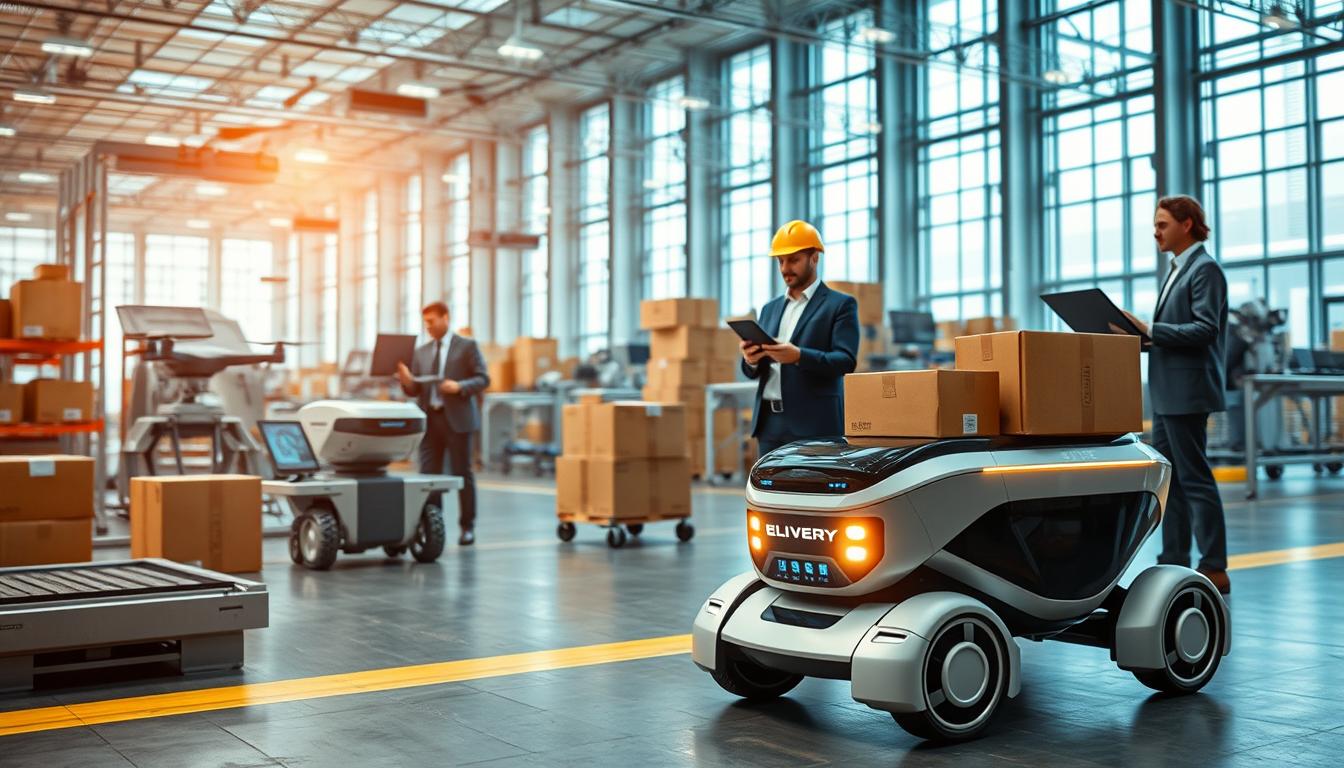
Robotics is expected to play a crucial role in delivery services, enabling faster and more efficient delivery of goods. Robots and drones are being tested for last-mile delivery, promising to revolutionize the way goods are delivered to consumers.
The use of robotics in delivery services is anticipated to:
- Enhance delivery speed and efficiency.
- Reduce labor costs associated with human delivery personnel.
- Improve safety by minimizing the risk of accidents associated with human error.
Industry and Manufacturing: The Revolution of Robotics and Smart Manufacturing
The industry and manufacturing sector is undergoing a real revolution with the spread of robotics and smart manufacturing. This transformation is not only technical but represents a fundamental change in how factories and production sectors operate. In this section, we will discuss the impact of artificial intelligence on industry and manufacturing, focusing on robots in factories and manual work.
Robotics Forecast in Factories and Production Sectors
Robots are expected to play an increasingly important role in factories and production sectors by 2030. According to a report by "UC Bruins," the industrial robotics market is expected to reach $135 billion by 2025.
These robots will be smarter and more adaptive, capable of interacting with their environments more effectively. They will also be integrated with other technologies such as the Internet of Things (IoT) and artificial intelligence to improve production efficiency and reduce costs.
Manual Work: Will It Remain Safe from Automation?
As robots and smart machines advance, questions remain about their impact on manual labor. Some manual jobs may remain relatively safe due to their nature, which requires creativity and fine motor skills.
However, some manual tasks may be subject to change or replacement. For example, some manual assembly processes may be replaced by industrial robots.
The Future of Labor in Smart Factories
As factories transform into "smart factories," there will be a need for workers with advanced technical skills. This will require knowledge of programming, robot maintenance, and data analysis.
As noted by
The CEO of Siemens: "Smart factories are not just about technology, but about how to use it to improve productivity and efficiency."
Workers will also need to be able to adapt to continuous technological changes.
- Learn new skills such as programming and data analysis.
- Adapt to changing technology.
- Focus on creative and additional skills.
Technology and Creativity: Sectors Differently Affected
With the advancement of artificial intelligence, it becomes essential to understand how it will affect jobs in technology and creative sectors. These sectors are undergoing radical changes due to technological developments, and some jobs will be more affected than others.
Programming Jobs: Between Growth and Replacement by Smart Algorithms
AI affects programming jobs in varied ways. On one hand, there is a growing need for developers who can work with and develop AI technologies. On the other hand, some programming tasks may be replaced by smart algorithms.
Software development will remain a vital field, but with a focus on integration with AI. Developers who can design and build smart applications will be in high demand.
Creative Jobs: Will They Remain Resistant to AI?
Creative jobs such as graphic design, creative writing, and filmmaking are often seen as resistant to AI. However, smart tools have begun to emerge to assist in some of these tasks.
For example, smart graphic design tools can help designers create more professional designs faster. Nevertheless, human creativity still plays a crucial role in these fields.
How AI Will Affect Marketing and Advertising
The marketing and advertising sector is experiencing significant changes due to AI. Data analysis, personalized consumption, and content consumption are areas where AI can play a major role.
- Analyze big data to understand consumer behavior.
- Personalize content consumption based on user preferences.
- Improve marketing strategies using predictive models.
Legal and Analytical Jobs: What Will Change by 2030
Legal and analytical professions will also be affected by AI. Some legal tasks, such as searching documents and legal records, may be automated. Additionally, predictive analytics will assist in legal decision-making.
However, critical thinking and deep analysis will remain essential in these fields. Legal analysts will need to adapt to new technology to enhance their performance.
Future Jobs Map: Required Skills After 2030
With the advancement of AI, new job opportunities will emerge that were not available before. These opportunities will appear not only in technology fields but also in other sectors such as healthcare and education.
New Job Opportunities Emerging with AI Development
AI is expected to create new jobs in fields such as:
- Development and maintenance of AI systems
- Big data analysis
- Digital healthcare services
- Machine learning and AI in education
How Digital Skills Can Protect Employees from Replacement
Digital skills will be crucial in protecting employees from being replaced by robots and machines. Some of these skills include:
- Programming and data analysis
- Using modern technological tools
- Critical thinking and problem solving
Workforce Retraining Strategies
To retrain the workforce, the following strategies can be adopted:
- Provide advanced training programs in technology fields
- Encourage continuous learning and professional development
- Develop educational programs focused on digital skills
Conclusion
The impact of AI on the labor market will be significant by 2030. Forecasts indicate that many jobs will change due to AI developments. Some sectors, such as office and administrative work, finance and accounting, and customer service, will be heavily affected.
The impact of AI on customer service jobs will be evident through the use of chatbots and automated response systems. While some jobs may disappear, new job opportunities will emerge with technological advancement.
Digital skills will be essential to protect employees from replacement. It is crucial for individuals to adapt to changes and develop their skills to meet the future labor market demands.
FAQ
Which jobs will change due to AI by 2030?
Many jobs will be affected by AI, including office and administrative jobs, service sector jobs, and jobs in transportation and delivery.
How will AI affect the global labor market?
AI will bring significant changes to the global labor market, as some jobs will be replaced, and new job opportunities will emerge in areas such as digital healthcare and smart learning.
Will traditional accounting tasks disappear before 2030?
Traditional accounting tasks may be affected by AI, but they are not expected to disappear entirely before 2030. Some tasks will be converted to smart systems, while accountants will still be needed for data analysis and advisory roles.
How can digital skills protect employees from replacement?
Digital skills can protect employees from replacement by giving them the ability to adapt to new technologies and work alongside smart systems.
Which creative jobs will remain resistant to AI?
Creative jobs such as art, design, and writing will remain resistant to AI, as these roles require human creativity and innovation.
How will AI affect marketing and advertising?
AI will bring changes to marketing and advertising, using data and analytics to improve consumption and personalize advertisements.
What new job opportunities will emerge with AI development?
New job opportunities will appear in fields such as digital healthcare, smart learning, robotics, and data analysis.
How can the workforce be retrained to face labor market changes?
The workforce can be retrained by providing training and education in digital skills, analytics, and artificial intelligence.