Why Are Americans Leaving Big Cities in 2026? A Complete Analysis of Economic and Social Shifts
Technology
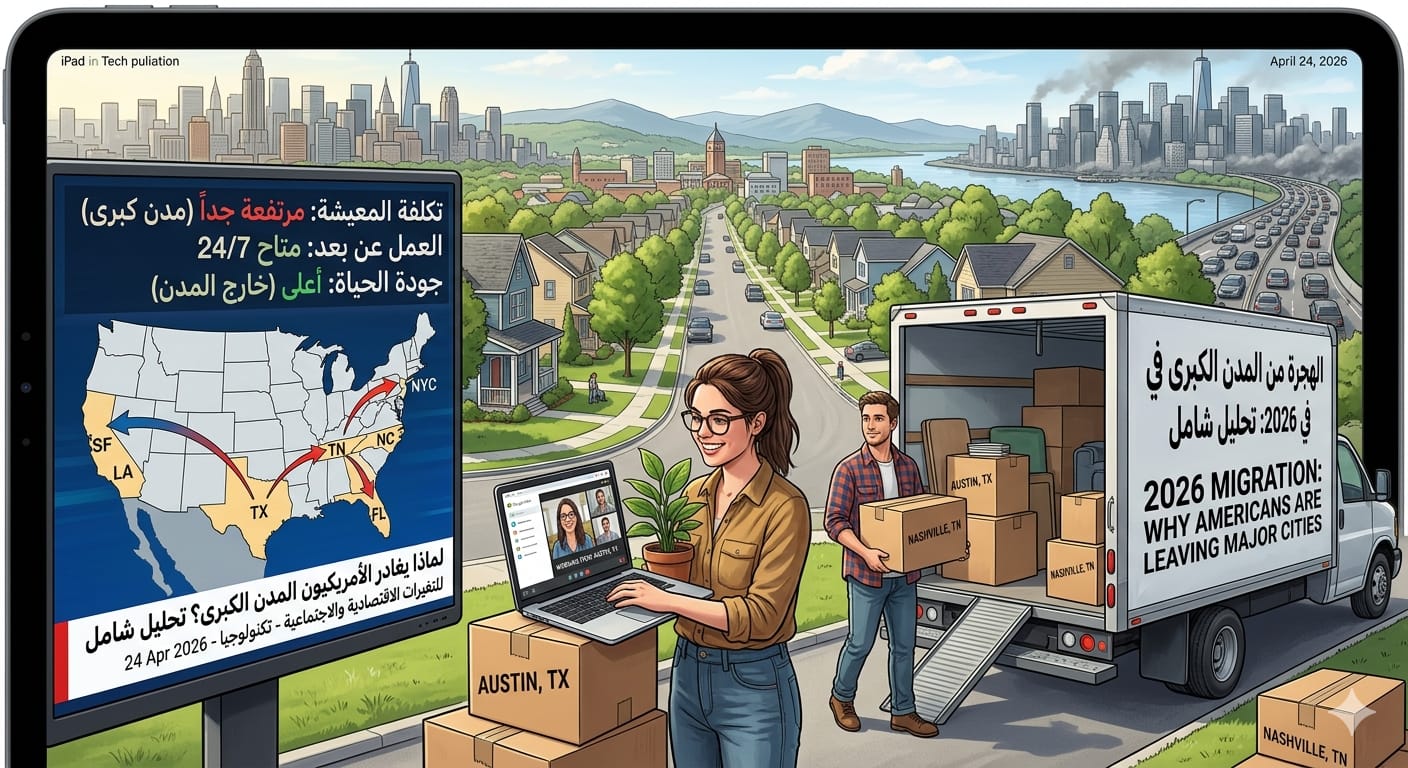
In 2026, Americans are increasingly leaving major cities due to rising living costs, the expansion of remote work, declining quality of life, and growing financial pressure. This shift reflects a deeper transformation in lifestyle priorities—moving toward flexibility, affordability, and long-term stability outside crowded urban centers.
Introduction — The Silent Shift Reshaping America
In recent years, major cities like New York City and Los Angeles are no longer the ultimate dream destinations.
Instead, they are gradually losing their appeal as more people reconsider what truly matters in life.
This shift is not sudden—it’s the result of long-term economic and social pressures building over time.
Data shows a massive internal migration toward more affordable and flexible states and cities.
In 2026, decisions are no longer based on opportunity alone, but on quality of life + financial sustainability.
Rising Cost of Living — The #1 Reason for Migration
Living costs in major cities have reached unprecedented levels, especially housing and basic services.
In cities like San Francisco, even middle-income earners struggle to maintain stability.
Wages are no longer keeping up with inflation, creating a widening gap between income and expenses.
This pressure is pushing people toward more affordable states like Texas and Florida.
Migration is no longer optional—it has become an economic necessity.
Impact of High Rent
Housing costs represent the largest financial burden for residents.
In many areas, rent exceeds 50% of monthly income.
This makes saving nearly impossible and increases stress levels.
As a result, relocating to cheaper cities becomes the most logical solution.
Inflation and Declining Purchasing Power
Inflation has significantly increased the cost of food and services.
Meanwhile, salaries have not risen at the same pace.
This imbalance forces people to rethink where they live.
The result: a shift toward more affordable and stable environments.
Remote Work — The Game Changer
The rise of remote work has completely transformed how people choose where to live.
Employees are no longer tied to office locations, especially with companies like Google and Amazon embracing flexibility.
Millions can now move to cheaper cities without losing their jobs.
Location is no longer the primary factor—flexibility is.
This is one of the strongest drivers behind the urban exodus.