10 Things Americans Are Secretly Giving Up in 2026 (Deep Analysis of Hidden Lifestyle Shifts in the U.S.)
Technology
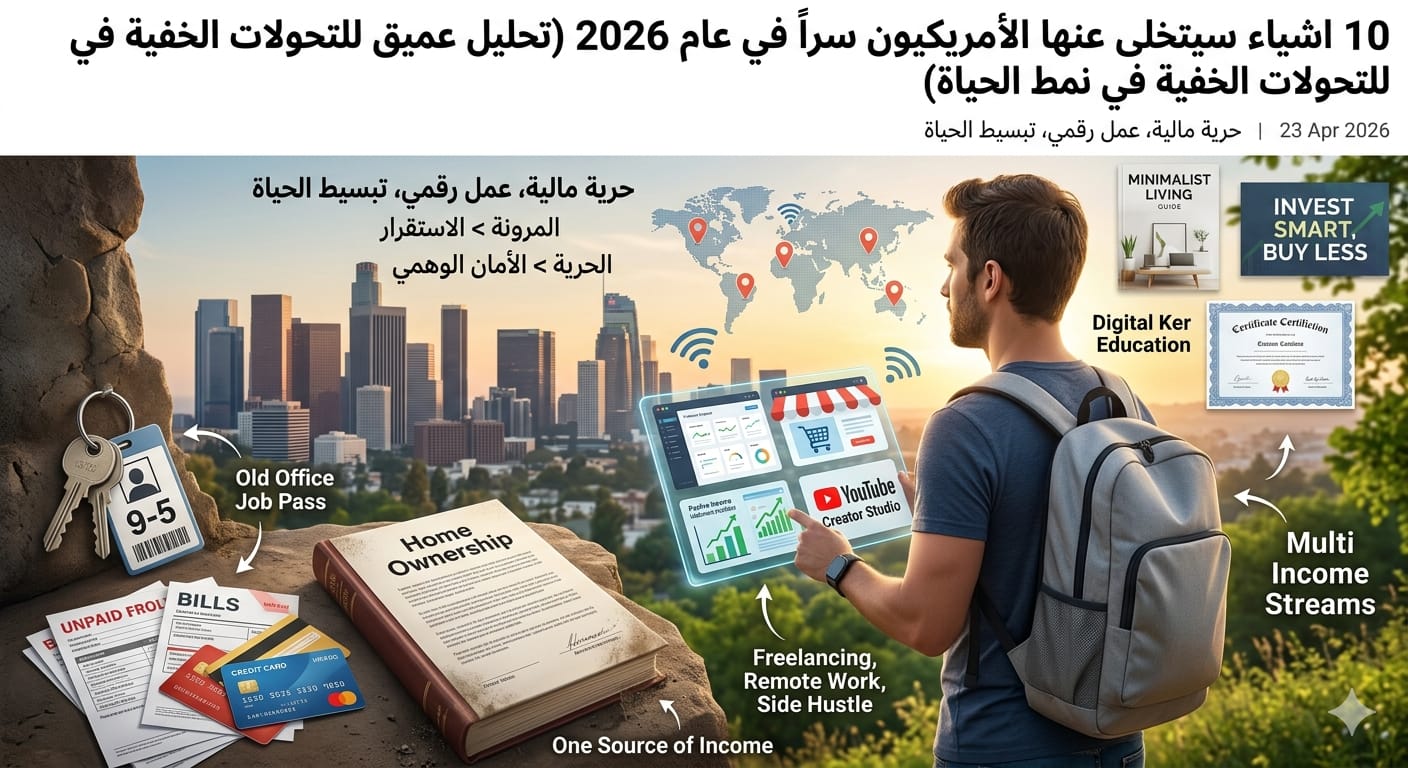
In 2026, Americans are quietly moving away from traditional jobs, single-income dependence, excessive consumption, home ownership, and outdated education systems. Instead, they are shifting toward digital income, financial independence, remote work, and simplified living. These changes are driven by inflation, technology, and evolving cultural values focused on freedom and flexibility.
Every era has visible trends… and hidden shifts that only a few truly notice.
What’s happening in the United States right now isn’t just evolution—it’s a deep transformation in how people think, work, and live.
The old rules—stable jobs, big houses, endless consumption—are no longer dominant.
In 2026, a new mindset is emerging:
👉 Flexibility over stability
👉 Freedom over illusionary security
This article reveals the real changes happening beneath the surface.
The traditional job is no longer the dream it once was.
It used to represent stability, retirement security, and long-term safety.
But today?
👉 It often means limitation, stress, and capped income.
Americans are realizing that trading time for money is no longer sustainable—especially with rising living costs.
Companies now lay off workers faster and more frequently.
Salaries are no longer keeping up with inflation.
Remote work opened new doors beyond traditional employment.
Freelancing, remote work, and side hustles are replacing the old model.
People want control over their time and income.
The job is no longer “security”—it’s just one option.
Depending on a single paycheck has become risky.
In 2026, Americans understand a simple rule:
👉 If your income stops, your life stops.
That’s why the shift toward multiple income streams is accelerating.
Salary + side income + investments is the new standard.
People are diversifying income to reduce risk.
Financial independence is becoming a priority.
Selling digital products, affiliate marketing, and YouTube channels.
Online businesses are easier to start than ever.
The goal is building a system—not just earning a salary.
The culture of buying everything is fading.
Inflation and debt have forced people to rethink spending habits.
In 2026, the mindset has shifted to:
👉 Buy less, earn more, invest smarter
Impulse buying is declining significantly.
Savings and investing are increasing.
People are prioritizing value over status.
Economic pressure and rising costs.
Financial education through online content.
A cultural shift toward minimalism and intentional living.
Owning a home used to symbolize success.
But in 2026, many see it as a financial burden.
High mortgage rates, long-term debt, and maintenance costs are pushing people away.
Housing prices are extremely high.
Flexibility is more valuable than ownership.
Mobility is becoming a priority.
Smart renting and flexible living.
Digital nomad lifestyles are growing.
People prefer freedom over long-term commitments.
College is no longer the only path to success.
Americans are questioning the value of expensive degrees.
👉 Why spend years and thousands of dollars… when skills can be learned faster?
Massive student debt.
Time-consuming education.
No guarantee of employment.
Online learning and skill-based education.
Short courses and self-education.
Practical knowledge is replacing theory.
Trust in large corporations is declining.
People no longer rely entirely on companies for stability.
Instead, they are building independence.
Frequent layoffs and instability.
Corporate control over careers.
Market monopolies.
Building a personal brand.
Launching individual projects.
Participating in the creator economy.
Big cities are losing their appeal.
People are moving toward quieter and more affordable areas.
High cost of living.
Stress and overcrowding.
Mental health challenges.
Smaller cities and suburban living.
Remote work enabling location freedom.
Better work-life balance.
Working only for money is no longer enough.
People now seek meaning, balance, and fulfillment.
Freedom and flexibility.
Personal growth and purpose.
Impact beyond income.
Career changes and entrepreneurship.
Re-defining success.
Prioritizing mental well-being.
Physical retail is declining rapidly.
E-commerce is becoming the default shopping method.
Convenience and speed.
Wider selection and better prices.
Digital-first consumer behavior.
Decline of traditional stores.
Growth of online businesses.
Shift toward digital marketplaces.
Government support is no longer seen as reliable.
People want control over their financial future.
Economic uncertainty.
Changing policies and benefits.
Lack of long-term security.
Financial independence.
Building personal income systems.
Taking responsibility for wealth creation.
These shifts are not trends—they are structural changes.
Inflation, technology, and cultural evolution are driving them.
People are not choosing change… they are adapting to survive.
The system itself is being rewritten.
Inflation is reshaping financial behavior.
Rising costs are forcing smarter decisions.
People are becoming more cautious and strategic.
Spending is now intentional, not emotional.
The digital economy is now the foundation of income growth.
Anyone can build an online business with minimal cost.
This shift enables independence from traditional systems.
It’s one of the biggest reasons behind lifestyle changes.
Change creates opportunity.
Those who adapt early gain the biggest advantage.
The key question is not “why is this happening?”
👉 It’s “how can I benefit from it?”
Financial freedom is now the main goal.
People want income systems—not just jobs.
Passive income and side hustles are becoming essential.
Freedom is the new definition of success.
AI is accelerating this transformation.
One person can now do the work of an entire team.
This reduces costs and increases opportunities.
It’s making independence more achievable than ever.
Q: Can anyone benefit from these changes?
Yes, with the right mindset, learning, and action.
Q: What’s the fastest way to enter the digital economy?
Freelancing or selling digital products online.
Q: Is freelancing stable?
Yes, if you build multiple income streams.
Q: Will AI replace jobs?
It will transform jobs and create new opportunities.
Q: What is the most important skill in 2026?
Adaptability and fast learning.
Q: Why is the American lifestyle changing?
Due to inflation, technology, and cultural shifts.
Q: Are traditional jobs disappearing?
No, but they are losing dominance.
Q: What is the best alternative?
Digital income and flexible work systems.
Q: Are these changes permanent?
Yes, they represent a long-term transformation.
What’s happening now is a redistribution of opportunity.
👉 Those who understand the shift will grow
👉 Those who resist it will fall behind
2026 is not just another year…
It’s the beginning of a new era:
From jobs → income systems
From consumption → investment
From dependence → independence
And this is just the start.