How Chromosomes Carry Genetic Traits Across Generations
Technology
The main markers are structures devoid of all elements, and they are an important part of the preparatory processing from generation to generation.
The structure of chromosomes and cytoplasms consists of components and proteins, and is greatly influenced by heredity.
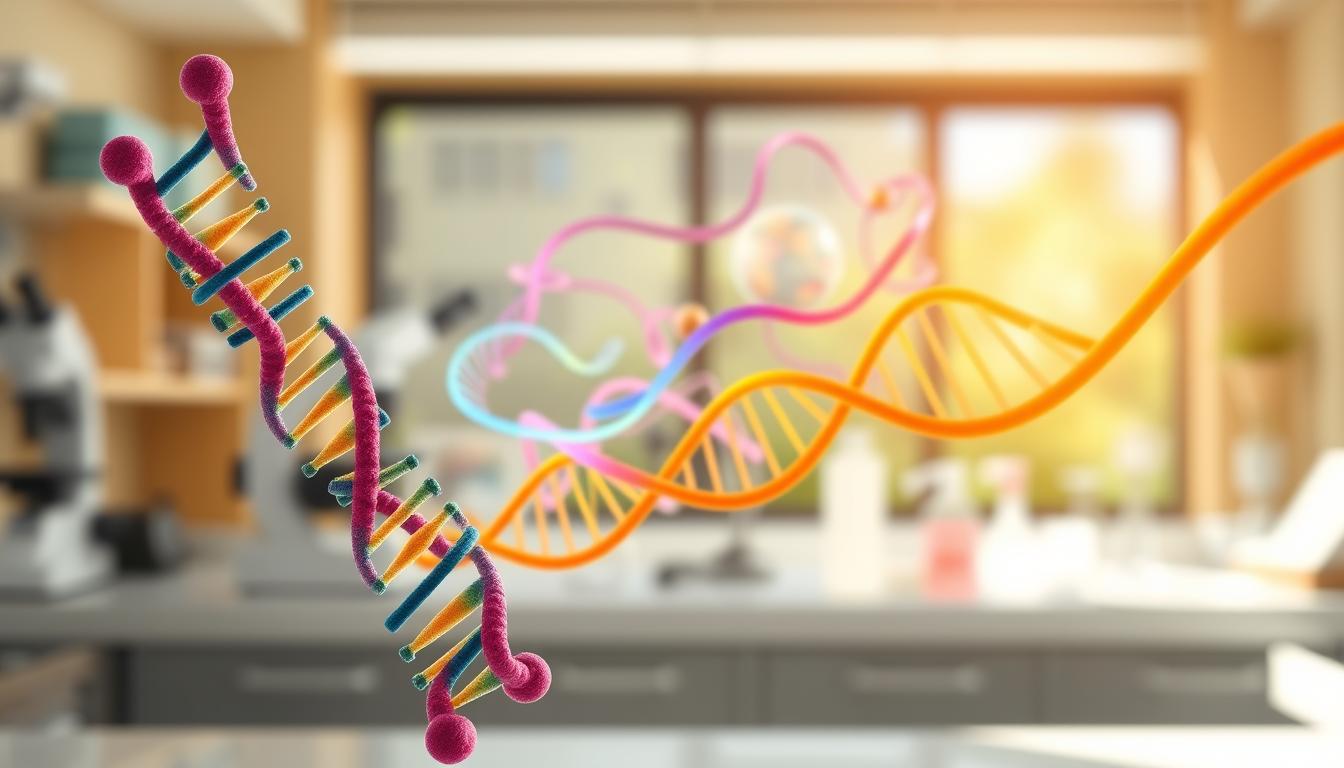
Understanding the structure and function of chromosomes helps us interpret how genetic traits are passed between generations.
Key Takeaways
- Chromosomes carry the genes that determine genetic traits.
- Chromosome structure is influenced by DNA and proteins.
- Genetic traits are transmitted from generation to generation via chromosomes.
- Understanding chromosomes helps in explaining heredity.
- Chromosomes play a crucial role in the inheritance process.
What Chromosomes Are and Their Importance in Genetics
Chromosomes are complex structures inside cells that contain DNA, which carries genetic information. These structures play a critical role in transmitting hereditary information from one generation to another, making them essential for understanding genetics.
Definition of Chromosomes and Their Key Features
Chromosomes are cellular structures that carry genes encoding genetic traits. Chromosomes consist of DNA and histone proteins, located in the cell nucleus.
Their Role in Carrying Genetic Information
The role of chromosomes in carrying genetic information is fundamental to understanding how traits are passed from parents to offspring. Chromosomes contain genes that determine individual characteristics, such as eye and hair color.
| Function | Description |
| Gene carriage | Chromosomes contain genes that encode genetic traits. |
| Genetic information transfer | Chromosomes transfer genetic information from generation to generation. |
Discovery of Chromosomes and Evolution of Our Understanding
Chromosomes were discovered in the 19th century, and since then, our understanding of their roles and functions has greatly evolved. Modern studies have shown the importance of chromosomes in many biological processes.
Today, we know that chromosomes are not only important for heredity but also play a role in many genetic diseases.
Basic Structure of Chromosomes and Their Main Components
Chromosomes, these tiny structures carrying genetic information, have a complex structure that plays a vital role in heredity. They consist of several main parts, each with a specific role in chromosome function.
Basic Chromosome Structure
Chromosomes consist of DNA wrapped around histone proteins, forming a structure called chromatin. This structure allows the storage of large amounts of genetic information in a small space inside the nucleus.
Chromatids and the Centromere
Before cell division, the chromosome is copied to form two identical structures called chromatids, connected at a region called the centromere. The centromere is the attachment point between sister chromatids and plays a crucial role in chromosome separation during cell division.
Telomeres and Their Role in Protecting Chromosomes
Telomeres are repetitive nucleotide sequences located at the ends of chromosomes. They play an important role in protecting chromosomes from deterioration and fusion with other chromosomes.
Telomere Structure
Telomeres consist of repetitive DNA sequences, often rich in guanine. These repeated sequences form a special structure that protects the chromosome ends.
Importance of Telomeres in Chromosome Stability
Telomeres play a crucial role in maintaining chromosome stability. Without telomeres, chromosomes may degrade or fuse abnormally, potentially causing genetic problems.
In conclusion, the basic structure of chromosomes includes several main components, such as chromatids, the centromere, and telomeres. Each part plays a specific role in chromosome function and stability.
DNA and Its Relationship with Chromosome Structure
DNA is the primary component of chromosomes and plays a critical role in storing genetic information. Understanding DNA structure and its relationship with chromosomes is essential for understanding how genetic traits are inherited.
DNA Structure
DNA consists of a long chain of nucleotides, which have three main components: sugar (deoxyribose), a phosphate group, and nitrogenous bases. The nitrogenous bases are adenine (A), guanine (G), cytosine (C), and thymine (T).
These bases pair specifically: adenine with thymine and guanine with cytosine, forming "base pairs." This precise arrangement is the foundation for storing genetic information.
DNA Wrapping Around Histone Proteins
To store DNA in the nucleus, it is wrapped around histone proteins, forming a structure called chromatin. This process condenses DNA to fit within the nucleus.
Histones play an important role in regulating gene expression by controlling gene accessibility for transcription.
Relationship Between Genes and Chromosomes
Genes are segments of DNA that carry instructions for making proteins and are the basic units of heredity. Chromosomes, which contain DNA, are the carriers of these genes.
The relationship between genes and chromosomes is close, as the genes on chromosomes determine an individual's genetic traits.
As scientist Francis Crick said: "DNA is where genetic information is stored, and it is the foundation of life."
Role of Chromosomes in Inheriting Traits Across Generations
Chromosomes are the main structures that carry genetic information from parents to offspring. They play a critical role in determining which traits are passed from one generation to another. In this section, we discuss the mechanism of inheritance, Mendel’s laws, and genetic linkage.
Mechanism of Trait Inheritance from Parents to Offspring
The inheritance of genetic traits occurs through cell division, where chromosomes move from the parent cell to daughter cells. During this process, genes carried on chromosomes are distributed in a way that ensures precise inheritance of traits.
Inheritance occurs in two main stages: mitosis and meiosis. In mitosis, a cell divides into two daughter cells, each with the same number of chromosomes as the parent. In meiosis, which occurs in reproductive cells, the chromosome number is reduced by half to form gametes.
Mendel’s Laws and Their Relationship with Chromosomes
Mendel’s laws, formulated by Gregor Mendel, describe how genetic traits are inherited. These laws, including the law of segregation and the law of independent assortment, explain how genes on chromosomes are transmitted from generation to generation.
The law of segregation states that each pair of genes separates during gamete formation, with each gamete receiving only one gene from the pair. The law of independent assortment states that different genes are distributed independently of each other during gamete formation.
Genetic Linkage and Crossing Over
Genetic linkage occurs when certain genes are located on the same chromosome, leading to their inheritance together. Crossing over, which occurs during meiosis, allows the exchange of genetic material between homologous chromosomes, increasing genetic diversity.
Crossing over plays an important role in increasing genetic diversity by reshuffling genes. This diversity is essential for evolution and adaptation to environmental changes.
Mechanism of Genetic Material Transmission During Cell Division
During cell division, chromosomes are organized to ensure accurate distribution of genetic material. This precise organization is essential for the continuity of life and growth of organisms.
Stages of Cell Division
Cell division consists of several main stages: prophase, metaphase, anaphase, and telophase. In each stage, chromosomes play a specific role to ensure proper distribution of genetic material.
In prophase, chromosomes condense and become visible under the microscope. During metaphase, chromosomes align at the cell equator. In anaphase, sister chromatids separate toward opposite poles.
Chromosome Behavior During Division
Chromosomes exhibit organized behavior during cell division. During prophase, chromosomes condense and appear as distinct structures. In metaphase, chromosomes align along the cell’s equatorial line, ensuring equal distribution to daughter cells.
Ensuring Accurate Distribution of Genetic Material
Cell division requires precise mechanisms to ensure correct distribution of genetic material. One mechanism is ensuring that each daughter cell receives a complete and accurate copy of chromosomes, mediated by complex interactions between proteins and chromosomes.
Understanding how genetic material is distributed during cell division is crucial for understanding how traits are passed from generation to generation and the causes of certain genetic diseases.
Difference Between Mitosis and Meiosis
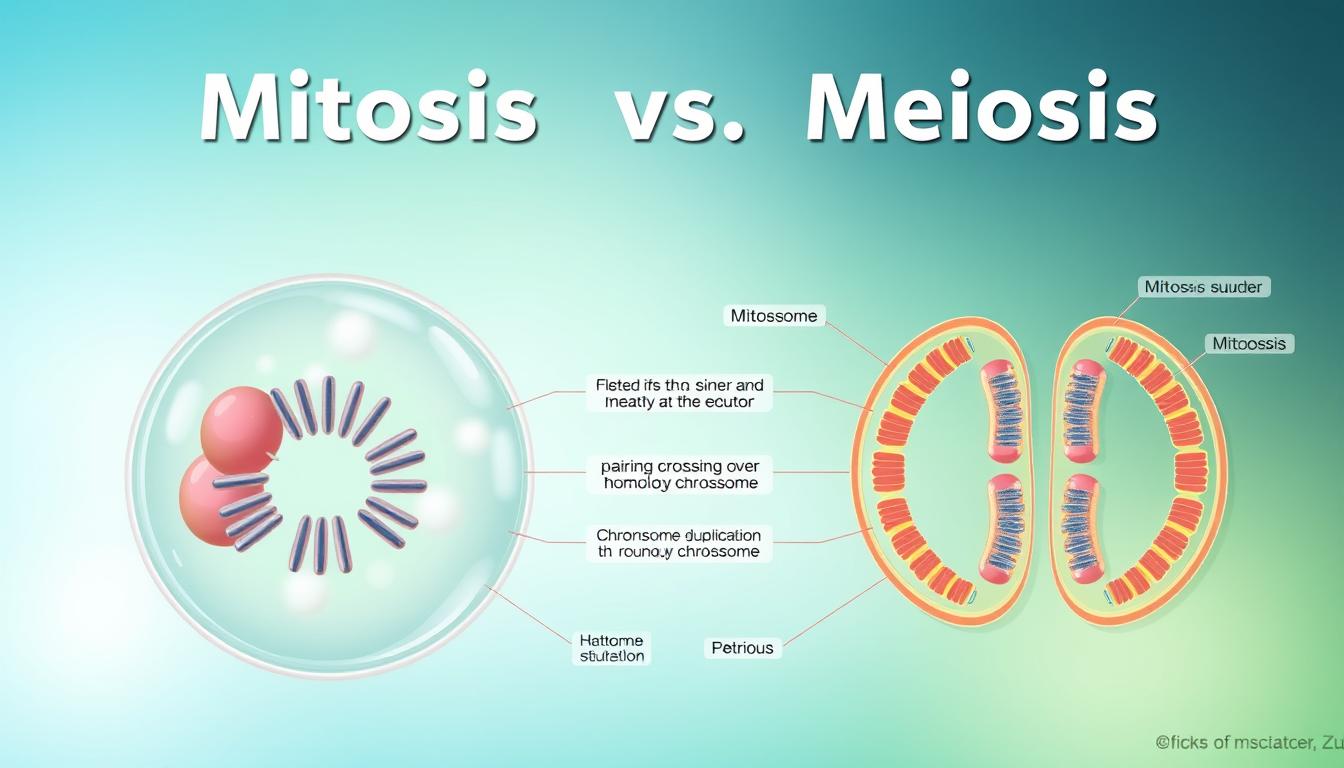
Mitosis and meiosis are two different processes of cell division and chromosome distribution, playing vital roles in growth and reproduction.
Mitosis: Mechanism and Importance
Mitosis is a cell division process producing two genetically identical daughter cells from the parent cell. This division occurs in somatic cells and consists of several stages: prophase, metaphase, anaphase, and telophase.
Importance of mitosis: It is critical for growth and cell repair, replacing damaged or dead cells.
Meiosis: Mechanism and Importance
Meiosis is a specialized cell division in reproductive cells (sperm and eggs). It results in four genetically different cells, each containing half the chromosome number of the parent cell.
Importance of meiosis: Increases genetic diversity through crossing over and produces gametes required for sexual reproduction.
Chromosome Distribution in Each Division Type
In mitosis, chromosomes are equally distributed between the two daughter cells. In meiosis, the chromosome number is reduced by half in the resulting cells.
| Feature | Mitosis | Meiosis |
| Purpose | Growth and cell repair | Production of gametes |
| Number of cells produced | Two | Four |
| Genetic diversity | No increase in genetic diversity | Increases genetic diversity |
| Number of chromosomes | Same as parent cell | Half of parent cell |
The Role of Sex Chromosomes (X, Y) in Determining Sex and Related Traits
Sex chromosomes play a crucial role in determining sex and the traits associated with it in humans. These chromosomes are responsible for identifying whether an individual is male or female, and they influence many sex-linked genetic traits.
Structure of the Sex Chromosomes
Sex chromosomes consist of two types: the X chromosome and the Y chromosome. Females usually have two X chromosomes (XX), while males have one X chromosome and one Y chromosome (XY). The X chromosome is larger and carries more genes than the Y chromosome.
Mechanism of Sex Determination in Humans
Sex determination in humans depends on the presence or absence of the Y chromosome. When the Y chromosome is present, the SRY gene is activated, initiating the formation of testes, which leads to the development of male reproductive organs. In the absence of the Y chromosome, the reproductive organs develop into female organs.
Sex-Linked Traits and How They Are Inherited
Sex-linked traits are those influenced by genes located on the sex chromosomes. Some of these traits are inherited through the X chromosome, such as color blindness, while others are linked to the Y chromosome.
| Chromosome | Associated Traits |
| X | Color blindness, hemophilia |
| Y | Male sex determination |
In conclusion, the role of sex chromosomes in determining sex and related traits is a complex and important aspect of genetics. Understanding the structure and function of these chromosomes helps explain many genetic phenomena.
How Dominant and Recessive Traits Are Passed Through Genes on Chromosomes
Genes located on chromosomes are responsible for transmitting hereditary traits across generations. This process follows Mendel’s laws of inheritance, which define how dominant and recessive traits are passed down.
The Concept of Dominant and Recessive Traits
Dominant traits appear when an individual carries one copy of the dominant gene, whereas recessive traits appear only when an individual carries two copies of the recessive gene.
Example: Brown eye color is dominant over blue eye color. If an individual carries the gene for brown eyes, the brown color will appear even if the individual also carries the gene for blue eyes.
Mendelian Patterns of Inheritance
Mendelian inheritance follows specific patterns based on Mendel’s laws. These patterns include dominant inheritance, recessive inheritance, and codominance.
- Dominant inheritance: The dominant gene expresses the trait.
- Recessive inheritance: The trait appears only when two recessive genes are present.
Examples of Dominant and Recessive Traits in Humans
There are many examples of dominant and recessive traits in humans, such as eye color, hair color, and facial shape.
Example: The ability to roll the tongue is a dominant trait, while the inability to do so is a recessive trait.
This is how hereditary traits are passed through genes on chromosomes, following specific patterns according to Mendel’s laws.
Chromosomal Mutations and Their Impact on Genetic Traits
Chromosomal mutations are abnormal changes in the structure or number of chromosomes, and they significantly affect genetic traits. These changes may occur due to various reasons, including exposure to radiation or harmful chemicals.
Types of Chromosomal Mutations
There are two main types of chromosomal mutations: numerical mutations and structural mutations. Numerical mutations include conditions such as trisomy, where an extra chromosome is present. Structural mutations include deletion, duplication, and inversion.
Causes of Mutations
Chromosomal mutations occur due to several causes, including:
- Exposure to radiation
- Harmful chemicals
- Errors during cell division
Examples of Genetic Disorders Caused by Chromosomal Abnormalities
Several genetic disorders result from chromosomal abnormalities, including:
Down Syndrome
Down syndrome is a genetic condition caused by an extra copy of chromosome 21. Individuals with Down syndrome often have delayed physical and intellectual development.
Turner Syndrome
Turner syndrome occurs when a female has only one X chromosome instead of two. This condition is characterized by short stature and underdeveloped ovaries.
Klinefelter Syndrome
Klinefelter syndrome is a genetic condition in which a male has an extra X chromosome. Individuals with this syndrome may experience delayed sexual development.
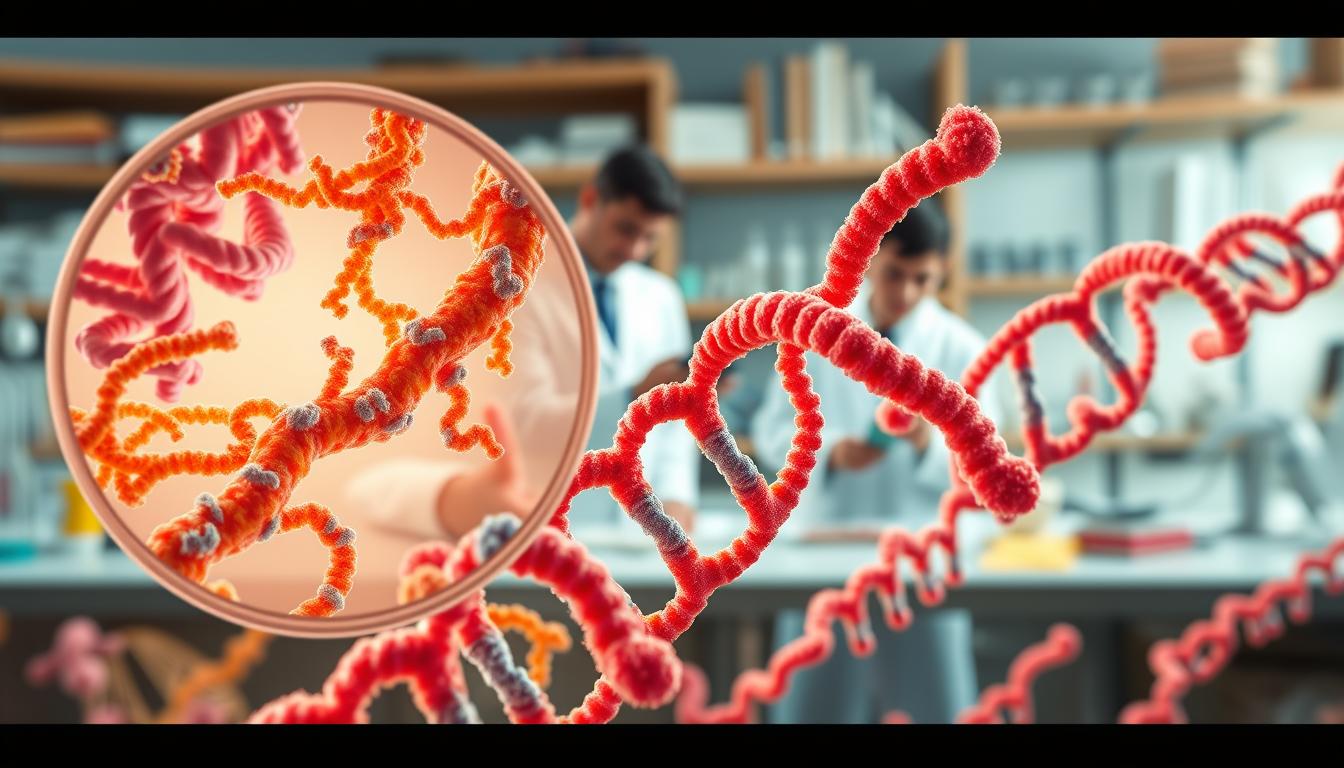
These examples emphasize the importance of understanding chromosomal mutations and their impact on genetic traits. A deep understanding of these phenomena can help in developing treatments and therapies for genetic disorders.
The Impact of Chromosome Number on Inheritance and Normal Development
The impact of chromosome number on inheritance and normal development is a vital aspect of genetics. The correct number of chromosomes is essential to ensure proper inheritance and healthy development in living organisms.
The Normal Chromosome Number in Humans
Humans have 46 chromosomes in each somatic cell, organized into 23 pairs. This precise number is necessary to ensure normal development and proper bodily functions.
Numerical Chromosomal Abnormalities
Numerical chromosomal abnormalities can lead to various genetic disorders. For example, Down syndrome results from an extra copy of chromosome 21, while Turner syndrome results from the loss of an X chromosome.
| Condition | Description | Effect |
| Down Syndrome | Extra chromosome 21 | Intellectual disability, physical issues |
| Turner Syndrome | Loss of an X chromosome | Ovarian insufficiency, short stature |
The Effect of Numerical Changes on Growth and Development
Numerical changes in chromosomes can significantly affect growth and development. These changes may lead to physical and intellectual developmental issues and increase the risk of certain diseases.
In conclusion, the correct chromosome number is essential for normal growth and proper inheritance. Understanding the effects of numerical chromosomal abnormalities can help improve healthcare and manage genetic disorders.
The Role of Chromosomes in Genetic Recombination and Biological Diversity
Chromosomes play a crucial role in the process of genetic recombination, which leads to biological diversity. During meiosis, chromosomes undergo complex interactions that increase genetic variation.
Genetic Crossing Over and Rearrangement of Genetic Material
Genetic crossing over is the exchange of genetic material between homologous chromosomes. This process occurs during meiosis and leads to the rearrangement of genetic material, increasing genetic diversity.
During crossing over, segments are exchanged between chromosomes, resulting in new genetic combinations. This process is essential for promoting genetic diversity.
The Role of Meiosis in Genetic Diversity
Meiosis is a vital process that produces reproductive cells. During meiosis, the number of chromosomes is reduced by half, enabling genetic exchange.
Meiosis plays a crucial role in increasing genetic diversity through:
- Genetic crossing over between homologous chromosomes.
- Random variation in chromosome distribution.
The Importance of Genetic Diversity for Evolution and Survival
Genetic diversity is the foundation of evolution and survival of living organisms. It allows organisms to adapt to environmental changes and survive.
Genetic diversity also plays a role in:
| Role | Effect |
| Adapting to environmental changes | Allows organisms to survive |
| Enhancing disease resistance | Reduces the impact of diseases on populations |
As the renowned geneticist Theodosius Dobzhansky said: “Nothing in biology makes sense except in the light of evolution.”
Evolution is an ongoing process that allows living organisms to adapt to their environments.
Modern Techniques for Studying Chromosome Structure and Analysis
Modern technologies provide new opportunities to understand chromosome structure and analyze it, contributing to advances in scientific and medical research. These techniques not only help in understanding chromosome structure but also in diagnosing genetic disorders and developing treatments.
Fluorescence In Situ Hybridization (FISH)
Fluorescence In Situ Hybridization (FISH) is one of the important techniques used to study chromosomes. It allows for the analysis and identification of specific locations on chromosomes using fluorescent markers.
FISH is used to diagnose chromosomal abnormalities and genetic disorders and is considered a valuable tool in genetic research.
Karyotype Analysis
Karyotype analysis is a technique used to study the chromosomes of a cell by imaging and arranging them systematically.
This analysis helps detect chromosomal abnormalities, such as changes in number or structure, and is used in diagnosing genetic disorders.
Modern Genetic Sequencing Technologies
Modern genetic sequencing technologies have revolutionized the field of genetics, enabling researchers to read genetic code quickly and accurately.
These techniques are used to understand genetic disorders and develop personalized treatments.
Applications of These Techniques in Medicine and Scientific Research
The applications of chromosome study techniques are broad and varied, as they are used in diagnosing genetic disorders, developing new treatments, and understanding genetic mechanisms.
| Technique | Use | Importance |
| FISH | Diagnosing chromosomal abnormalities | A valuable tool in genetic research |
| Karyotype Analysis | Detecting chromosomal abnormalities | Diagnosing genetic disorders |
| Genetic Sequencing Techniques | Reading the genetic code | Understanding genetic disorders and developing treatments |
Conclusion
Chromosomes play a crucial role in passing genetic traits from parents to offspring. Their structure and mechanisms determine how these traits are inherited. Understanding chromosomes and their significance in genetics helps explain many hereditary phenomena.
The role of chromosomes in inheriting traits is clearly seen during cell division, where genetic material is accurately distributed. Chromosome structure, which includes DNA and histone proteins, allows genetic information to be stored compactly and efficiently.
The importance of understanding chromosomes extends beyond genetics to medicine and scientific research. Understanding chromosome structure and function helps diagnose genetic disorders and develop new treatments.
In conclusion, this article highlights the importance of chromosomes in genetics, their structure, and their role in the inheritance of traits. Understanding these aspects contributes to scientific and medical progress.
FAQ
What is the role of chromosomes in passing genetic traits across generations?
Chromosomes play a crucial role in carrying and transmitting genetic information from parents to offspring, as they contain the genes responsible for hereditary traits.
What are chromosomes?
Chromosomes are cellular structures that contain DNA and histone proteins, and they are responsible for carrying genetic information.
How are chromosomes structured?
Chromosomes are composed of chromatids, a centromere, and telomeres, each playing a specific role in chromosome structure and function.
What is the role of DNA in chromosomes?
DNA is the primary component of chromosomes, carrying the genetic information that determines hereditary traits.
How are traits passed on through cell division?
Traits are passed on through cell division by the accurate distribution of chromosomes, where DNA is replicated and distributed to daughter cells.
What is the difference between mitosis and meiosis?
Mitosis produces daughter cells identical to the parent cell, while meiosis produces genetically diverse daughter cells.
How do sex chromosomes determine sex?
Sex chromosomes (X, Y) determine sex, where the presence of the Y chromosome results in male sex, while two X chromosomes result in female sex.
What are chromosomal mutations?
Chromosomal mutations are changes in the structure or number of chromosomes that can affect genetic traits and cause genetic disorders.
How do chromosomal mutations affect genetic traits?
Chromosomal mutations can lead to changes in genetic traits, such as hereditary diseases or changes in growth and development.
What are the techniques used to study chromosome structure?
Techniques for studying chromosome structure include Fluorescence In Situ Hybridization (FISH), karyotype analysis, and modern genetic sequencing technologies.