How Artificial Intelligence Enhances Game Design, Storytelling, and Realistic World Building
Technology
The latest technological innovations in the gaming industry are contributing to improved game design and the creation of realistic worlds.
Through advanced technologies, more interactive and realistic gaming experiences can now be created.

Key Takeaways
- Enhancing the gaming experience through artificial intelligence technologies
- Improving game design using artificial intelligence
- Developing storytelling in games
- Building realistic worlds using advanced technologies
- Increasing interaction and realism in games
Artificial Intelligence and Its Role in the Development of the Modern Gaming Industry
Artificial intelligence plays a crucial role in shaping the future of the modern gaming industry. By integrating artificial intelligence technologies, developers can create more interactive and realistic gaming experiences.
The Evolution of Artificial Intelligence Use in the Gaming Industry
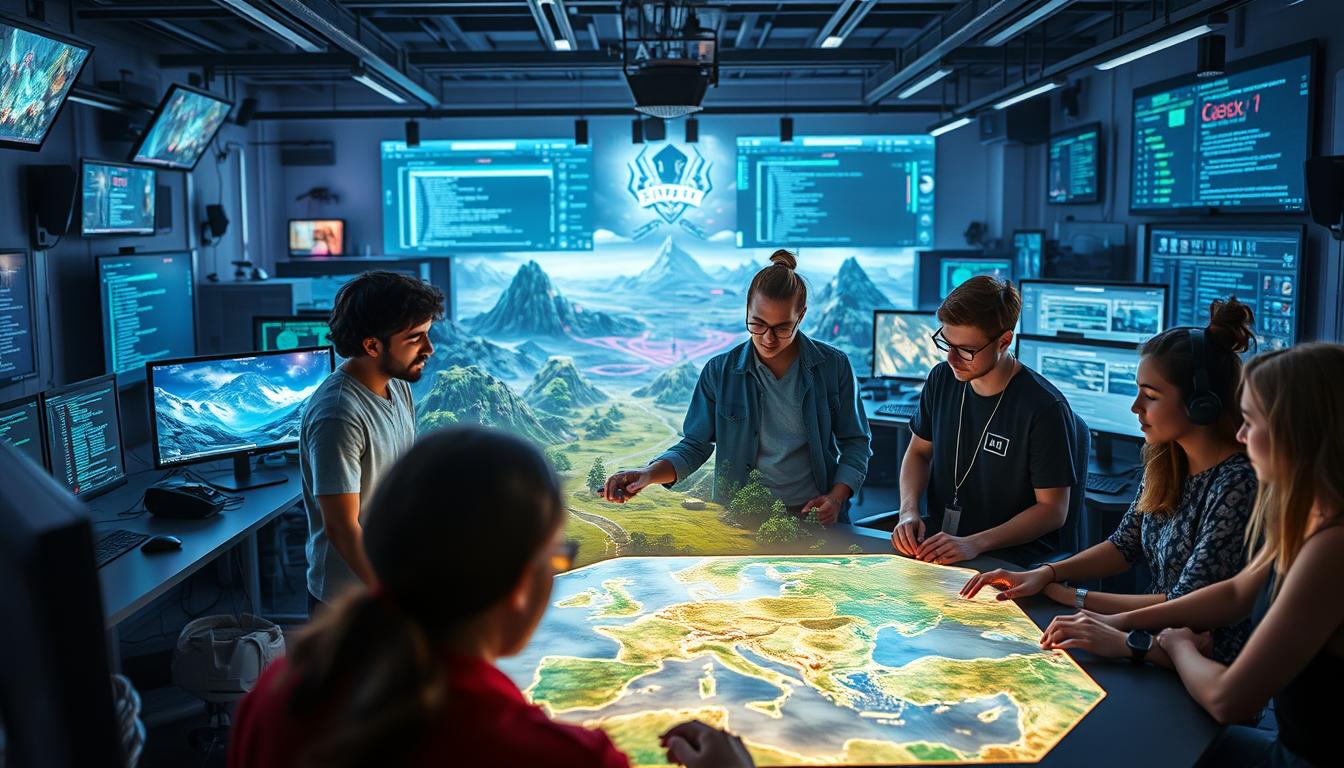
The use of artificial intelligence in the gaming industry began several decades ago, but recent advancements in this field have led to significant improvements in how games are designed and how gameplay is experienced. Initially, artificial intelligence was primarily used to enhance the behavior of non-player characters (NPCs), making them smarter and more interactive.
As technology advanced, the role of artificial intelligence expanded to include other aspects of the gaming industry, such as procedural content generation, graphics enhancement, and personalizing the gaming experience for players. This evolution has led to the emergence of more complex and interactive games.
Key Transformations Brought by Artificial Intelligence to the Gaming Experience
Artificial intelligence has brought major transformations to the gaming experience, making games more realistic and interactive. Through the use of machine learning techniques, games can now adapt to the player’s playstyle and offer appropriate challenges.
Additionally, artificial intelligence has contributed to improving level design and generating dynamic game environments, which increases enjoyment and reduces repetition. These transformations make the gaming experience more exciting and engaging.
By using artificial intelligence technologies, developers can create games that offer personalized experiences for players, enhancing player satisfaction and increasing the level of interaction with the game.
How Does Artificial Intelligence Enhance Game Design, Storytelling, and the Creation of Realistic Worlds?
Artificial intelligence is revolutionizing the gaming industry by enhancing game design and storytelling. This development is not limited to improving visual aspects alone, but extends to enhancing the overall player experience.
The Impact of Artificial Intelligence on Core Game Design Elements
Artificial intelligence significantly affects core game design elements such as level design and character development. By using artificial intelligence technologies, more complex levels and more realistic characters can be created.
For example, artificial intelligence can generate new levels based on player performance, which increases game challenges and makes the experience more exciting.
Integrating Artificial Intelligence into the Creative and Design Process
Artificial intelligence can be integrated into the creative and design process through the use of content generation tools and player behavior analysis. These tools help in understanding player preferences and delivering a personalized gaming experience.
Enhancing the Player Experience Through Artificial Intelligence Technologies
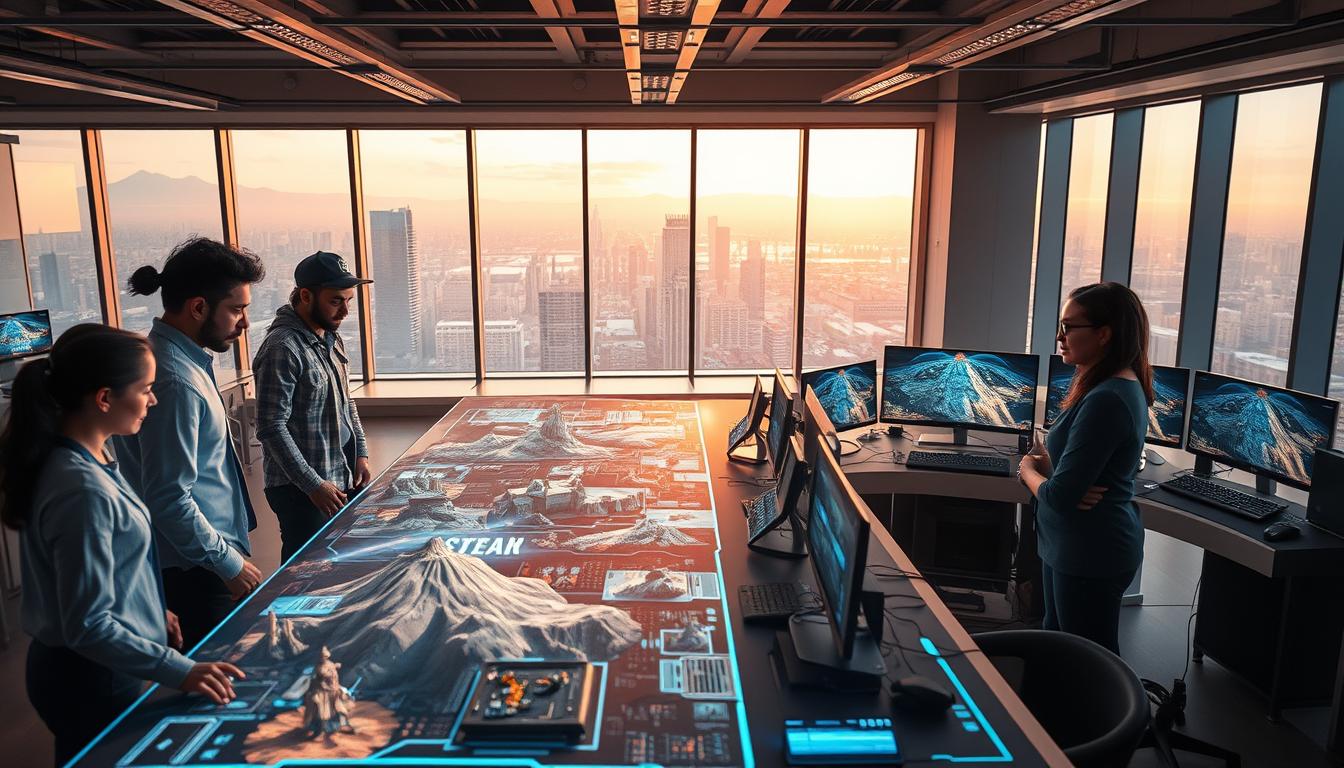
Artificial intelligence technologies are not limited to improving the visual aspects of games only, but also contribute to enhancing the player experience. By analyzing player behavior, AI can adapt difficulty levels and provide appropriate challenges.
This results in a more enjoyable and exciting gaming experience, where the player feels challenged without experiencing frustration.
Modern Artificial Intelligence Techniques for Enhancing Graphics and Visual Effects
Advancements in artificial intelligence technologies have led to significant improvements in graphics and visual effects within games. These enhancements extend beyond image quality to overall gameplay experience.
AI-Based Graphics Generation Techniques
AI-based graphics generation techniques have become a powerful tool in the gaming industry. Using advanced algorithms, AI can generate high-quality graphics at great speed, reducing development time and enhancing scene realism.
Real-Time Image and Visual Effects Enhancement
Artificial intelligence plays an important role in enhancing image quality and visual effects in real time. Techniques such as deep learning allow for improved image resolution and more realistic visual effects during gameplay.
Practical Applications of AI in Animation Design
AI applications in animation design include generating realistic character movements and improving character interaction with the surrounding environment. These techniques make games more engaging and interactive.
By using modern AI technologies, game developers can deliver unique and exciting gaming experiences. These technologies not only enhance visual aspects, but also create deeper and more interactive gameplay.
The Role of Machine Learning in Creating Deeper and More Complex Games
The role of machine learning in games is evident in enhancing player experience and delivering dynamic challenges. Machine learning allows developers to create games that adapt to individual playstyles, increasing challenge and enjoyment.
How Machine Learning Contributes to Gameplay Mechanics Development
Machine learning can improve gameplay mechanics by analyzing player behavior and providing adaptive responses, creating unique experiences for each player.
Some ways machine learning contributes to gameplay mechanics include:
- Analyzing player behavior and providing appropriate challenges.
- Developing intelligent non-player characters (NPCs) that interact realistically with players.
- Generating new levels based on player performance.
Improving Algorithms to Create Dynamic Challenges
Machine learning can enhance algorithms used to create dynamic challenges by analyzing player performance and adjusting difficulty accordingly.
This leads to a more exciting and challenging gaming experience, as the game adapts to player abilities.
Examples of Games That Effectively Use Machine Learning
Many games effectively use machine learning, such as:
- Survival games that adapt to player strategies.
- Adventure games that use machine learning to generate unique stories.
- Strategy games that use machine learning to improve enemy AI.
Examples of Games That Successfully Use Generative Environments
There are many games that have benefited from virtual environment generation technologies. Notable examples include:
- No Man's Sky - a space adventure game that uses world generation to create diverse planets
- Minecraft - a building game that uses world generation to create block-based worlds
- The Elder Scrolls: Arena - a role-playing game that uses world generation to create dungeons and adventures
In conclusion, the use of artificial intelligence in building generative game environments demonstrates enormous potential to enhance the gaming experience and provide unique experiences for players. As AI technologies continue to evolve, more innovations in this field can be expected.
What Does Artificial Intelligence Add to Smart Level Design?
Artificial intelligence adds a new dimension to level design by enabling the creation of more interactive and adaptive gaming experiences. By using AI technologies, game designers can create intelligent levels that adapt to player skills and preferences.
Adaptive Level Design Using Artificial Intelligence
Artificial intelligence can be used to create levels that adapt to player performance. This means the game can become more or less challenging depending on how the player performs, increasing enjoyment and reducing boredom.
Adaptation techniques include using algorithms to analyze player performance and adjust difficulty accordingly, creating a more personalized and effective gaming experience.
Balancing Challenge and Fun in Procedurally Generated Levels
One of the main challenges in smart level design is achieving a balance between challenge and fun. Artificial intelligence helps by analyzing player data and generating levels that maintain this balance.
The ideal balance between challenge and fun ensures players remain engaged without feeling frustrated or bored.
Practical Applications in Modern Games
Many modern games use artificial intelligence in smart level design. For example, some games use procedural generation techniques to create new and diverse levels.
These games demonstrate how artificial intelligence adds significant value to the gaming experience, making it more engaging and varied.
The Role of Artificial Intelligence in Analyzing Player Behavior and Improving Challenges
Artificial intelligence opens new horizons for improving game challenges by analyzing player behavior and delivering a personalized gaming experience.
Collecting and Analyzing Player Data to Improve Gameplay
One of the most important AI applications is collecting and analyzing player data. This data is gathered by tracking in-game behavior, such as time spent completing levels and the number of failed attempts.
After collection, AI algorithms analyze the data to identify patterns and player preferences, allowing for customized gameplay such as difficulty adjustments or new content delivery.
Adapting Difficulty Based on Player Performance
Artificial intelligence can adapt game difficulty based on player performance to maintain engagement without causing frustration.
Advanced algorithms analyze player performance and adjust difficulty accordingly, ensuring a smooth and enjoyable experience.
Deep Learning Techniques for Understanding Play Patterns
Deep learning techniques play an important role in understanding complex play patterns by analyzing large amounts of data.
By using artificial neural networks, games can learn player behavior and deliver a personalized experience, enhancing engagement and overall player satisfaction.
How AI-Powered Engines Create More Realistic Games
AI-powered engines have radically transformed the gaming industry by making gameplay more realistic and immersive.
The Evolution of AI-Powered Game Engines
Game engines have evolved significantly with AI support. Previously, games relied on predefined scripts, whereas AI-powered engines can now adapt to player behavior.
Examples of engine evolution:
- Enhancing graphics using AI technologies.
- Generating dynamic game environments.
- Improving non-player character (NPC) behavior.
Physics Simulation and Realistic Environments
One of the most important AI applications in gaming is simulating realistic physics and environments through advanced algorithms.
For example, game engines can simulate gravity, wind, and water effects realistically.
Case Studies of Advanced Game Engines
Many advanced game engines use artificial intelligence, such as Unreal Engine and Unity, to enhance graphics and create immersive game worlds.
In this way, AI-powered engines have made games more realistic and enjoyable, opening new possibilities for the gaming industry.
How Artificial Intelligence Reduces Game Development Time and Improves Quality
Using artificial intelligence in game development opens new opportunities to improve quality and reduce development time.
AI Tools for Accelerating Development
AI tools play a crucial role in speeding up development by automating many time-consuming tasks.
- Automated content generation
- Player behavior analysis
- Graphics and visual effects optimization
Automatic Bug Detection and Fixing
Artificial intelligence can help detect and fix bugs automatically, reducing development time and improving quality.
Artificial intelligence can significantly reduce software bugs, enhancing game quality and shortening development cycles.
Improving Development Team Efficiency Using AI
Artificial intelligence improves development team efficiency by providing advanced data analysis and decision-making tools.
Examples include:
- Using machine learning to analyze and optimize game performance
- Applying AI technologies to enhance player experience
- Automating routine tasks to allow developers to focus on innovation
The Role of Artificial Intelligence in Enhancing NPC Behavioral Intelligence
Advances in AI technologies have enabled the creation of more realistic and interactive non-player characters (NPCs).
The Evolution of NPC Behavior Over Time
NPC behavior has evolved significantly, moving from predefined patterns to context-aware decision-making.
AI Techniques for Creating More Realistic Characters
Several AI techniques enhance NPC realism, including:
- Machine learning that allows characters to learn from experience.
- Neural networks that simulate human-like behavior.
- Decision-making algorithms that improve logical choices.
Challenges and Solutions in Designing Intelligent Characters
Designing intelligent NPCs poses several challenges, such as ensuring realistic and consistent behavior.
Solutions include using advanced AI techniques and continuous testing and refinement.
The Impact of Artificial Intelligence on Audio and Sound Effects in Games
Artificial intelligence is revolutionizing game audio by enhancing sound quality and dynamic interaction with game events.
Generating Music and Sound Effects Using AI
AI can generate music and sound effects that match game atmospheres, enhancing realism.
Adapting Audio Based on Game Events
AI adapts audio based on game events and environmental changes.
Natural Language Processing in Games
Natural language processing enables more realistic interaction between players and NPCs.
How Artificial Intelligence Enhances Personalized Gaming Experiences
Artificial intelligence enhances unique gaming experiences by analyzing player behavior and customizing content.
Dynamic Content Personalization Techniques
- Analyzing player behavior and identifying play patterns.
- Generating new content based on player preferences.
- Adapting difficulty based on performance.
Adapting Challenges and Rewards to Playstyles
- Providing greater challenges for advanced players.
- Offering additional assistance to new players.
- Customizing rewards based on achievements.
The Future of Fully Personalized Games
With continued AI advancements, fully personalized games will become more common, enhancing engagement and player satisfaction.
The Future of AI-Powered Game Design: Where Is the Industry Headed?
The gaming industry is moving toward an AI-powered future to enhance player experiences.
Emerging AI Technologies in Gaming
- Automated content generation
- Advanced AI-driven NPC development
- Player experience optimization through data analysis
Future Ethical and Technical Challenges
- Ensuring player data privacy
- Avoiding bias in AI algorithms
- Developing ethical standards for AI use in games
Industry Expert Predictions
Experts predict AI will become an integral part of game design, leading to more realistic and interactive experiences.
Conclusion
This article explored how artificial intelligence enhances game design, storytelling, and the creation of realistic worlds. Artificial intelligence in game design opens new opportunities to improve and personalize player experiences.
Through technologies such as machine learning and automated content generation, developers can create more complex and interactive games. AI game design offers vast potential for enhancing game appeal.
Artificial intelligence not only enhances game design but also improves player experience by adapting challenges and rewards, resulting in more engaging gameplay.
In the future, greater advancements in AI use within the gaming industry will unlock even more innovation.
FAQ
How can artificial intelligence enhance game design?
Artificial intelligence enhances game design by generating dynamic content and adapting gameplay based on player behavior.
What is the role of machine learning in game development?
Machine learning plays a key role in improving game mechanics, dynamic challenges, and personalized gameplay.
How can AI improve storytelling in games?
AI enhances storytelling by generating personalized narratives and adaptive dialogue.
What AI techniques are used to improve graphics and visual effects?
AI techniques include AI-generated graphics, real-time image enhancement, and visual effects optimization.
How can AI improve player experience?
AI improves player experience by adapting difficulty levels and customizing gameplay.
What is the role of AI in analyzing player behavior?
AI plays a significant role in collecting and analyzing player data to enhance gameplay.
How can AI improve level design?
AI improves level design through adaptive levels and balanced procedurally generated content.
What AI techniques are used to improve audio and sound effects?
Techniques include AI-generated music and sound effects and dynamic audio adaptation.
How can AI improve NPC behavior?
AI improves NPC behavior by creating more realistic characters and evolving their behavior over time.
What is the future of AI-powered game design?
The future of AI-powered game design points toward advanced AI applications that further personalize and enhance gaming experiences.