A Complete Guide to Google AdSense Account Types and Which One Fits Your Website
Technology
Choosing the right AdSense account type is crucial to your success. In this guide, we'll discuss the different AdSense account types and the requirements for each.
The differences between them can be pivotal in determining the best AdSense account for you. We'll provide a comprehensive overview of how to choose the right account.

Key Takeaways
- Understanding the different types of AdSense accounts
- Choosing the right account for your website
- Requirements for each type of AdSense account
- The importance of selecting the correct account
- Tips for choosing the best type of AdSense
Overview of Google AdSense Accounts
Google AdSense is an advertising service provided by Google to help publishers earn money from their online content. This service allows website owners to display targeted ads on their sites, increasing the potential for revenue generation.
What is Google AdSense and How It Works
Google AdSense works by linking Google ads to your website’s content. When users visit the website and interact with the ads, publishers earn revenue for each click or impression. The earnings depend on several factors, including the type of ad and the quality of the content.
Some key benefits of using Google AdSense:
- Easy to use and integrate with websites
- Display of targeted ads that increase engagement opportunities
- Detailed reports on ad performance and publisher earnings
The Importance of AdSense as a Revenue Source for Websites
Google AdSense is an important revenue source for many websites. By displaying ads, website owners can earn significant income, especially if they have engaging content and high traffic. AdSense also provides analytics tools to help publishers improve their ad performance.

In conclusion, Google AdSense is a powerful tool for earning revenue online. By understanding how it works and taking advantage of its features, publishers can improve their earnings and the success of their websites.
The Difference Between Hosted and Standard Accounts for Beginners
When starting with Google AdSense, many beginners find it difficult to choose the right type of account. In this section, we will clarify the differences between the various AdSense accounts to help beginners make the correct decision.
A Quick Look at the Different Types of AdSense Accounts
There are two main types of AdSense accounts: standard accounts and hosted accounts. A standard account is the traditional type where ads are managed directly by the publisher. In contrast, a hosted account is where the ads are hosted by a third party, such as publishing platforms or companies that manage the content.
Key Differences Between the Accounts
The differences between the accounts appear in several aspects, including ease of acquisition, revenue potential, and control/management.
Ease of Acquisition
A hosted account is generally easier to obtain compared to a standard account, especially for beginners who may not have a large website or rich content.
Revenue Potential
Revenue potential differs between the two accounts. A standard account can be more profitable if managed properly, whereas a hosted account may provide a more stable income.
Control and Management
A standard account provides greater control over ads and how they are displayed, while a hosted account may have more restrictions regarding ad management details.
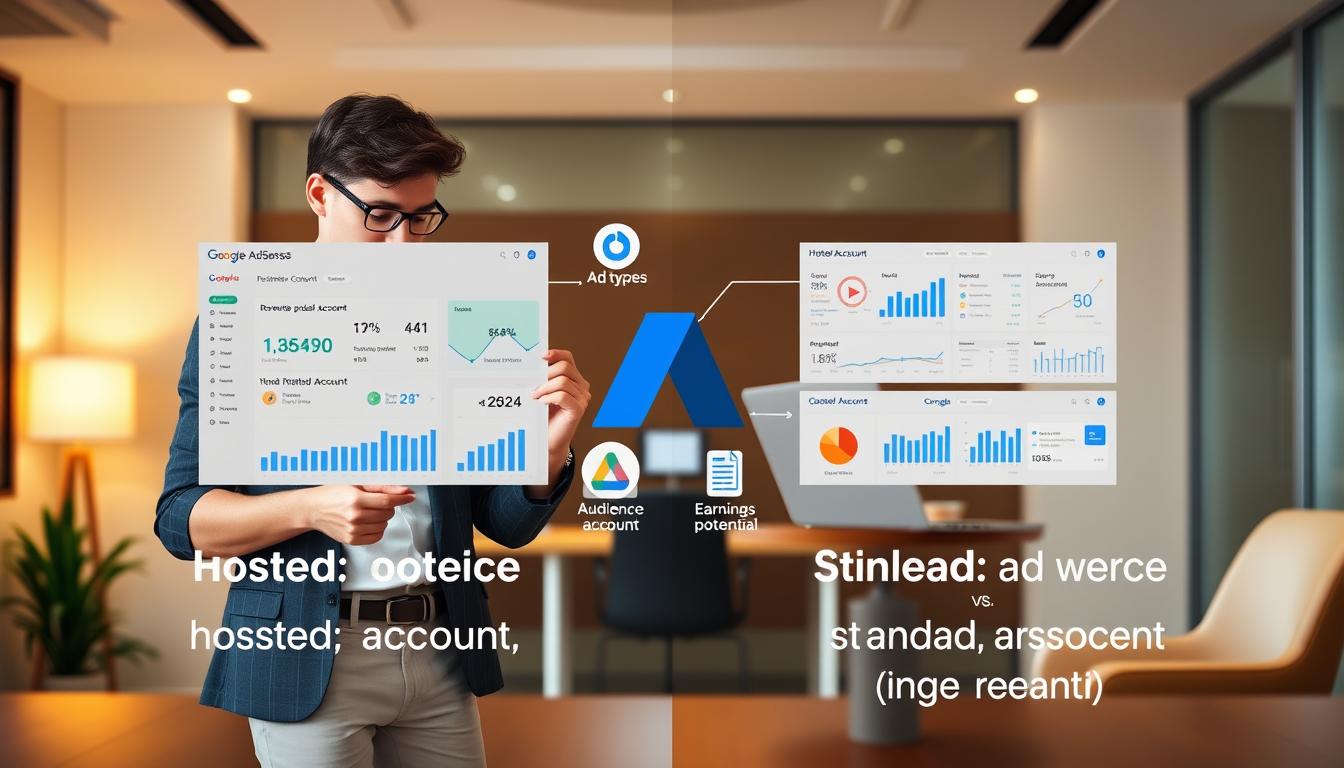
What is a Hosted Google AdSense Account and How It Works
A hosted Google AdSense account is a type of account provided by Google to help publishers manage their ads effectively. This type of account allows users to manage their ads across multiple platforms without the need to create separate accounts.
Definition of a Hosted AdSense Account
A hosted AdSense account is defined as an account that allows users to easily manage their ads on multiple platforms. This means the user can manage their ads on YouTube, Blogger, and other platforms through a single account.
How Hosted Accounts Work
The operation of hosted AdSense accounts is simple. When a user creates a hosted account, they can link it to multiple platforms like YouTube and Blogger. After that, they can manage their ads through a single dashboard.
Platforms That Support Hosted AdSense Accounts
There are several platforms that support hosted AdSense accounts. Some of these platforms include:
YouTube
- YouTube is one of the most popular platforms that support hosted AdSense accounts. Users can link their YouTube accounts to a hosted AdSense account for easy ad management.
Blogger
- Blogger is another platform that supports hosted AdSense accounts. Users can link their blogs on Blogger to a hosted AdSense account to earn revenue from their ads.
Other Platforms
- Other platforms also support hosted AdSense accounts, such as some content management systems (CMS) that allow users to integrate AdSense ads easily.
As Google states, "Hosted AdSense accounts provide users with great flexibility in managing their ads." This highlights the importance of using hosted AdSense accounts for publishers who want to maximize their ad revenue.
Key Requirements for Getting a Hosted AdSense Account for Individuals
Obtaining a hosted AdSense account requires a good understanding of the basic conditions and requirements. This type of account is ideal for individuals who want to monetize their websites or apps.
Basic Requirements for a Hosted Account
To get a hosted AdSense account, the following conditions must be met:
- You must have a website or mobile app that complies with Google AdSense policies.
- You must be able to provide valuable, high-quality content.
- You must be familiar with privacy policies and terms of service compliance.
These basic requirements ensure that the content provided is truly valuable to users and meets Google's standards.
Common Mistakes That Can Lead to Rejection
Several common mistakes may lead to the rejection of a hosted AdSense account request, including:
- Content that does not comply with Google's policies.
- Missing required information during the application process.
- Lack of a clear privacy policy.
To avoid these mistakes, ensure that you read and understand Google AdSense policies carefully and provide all required information completely and accurately.
Advantages and Disadvantages of Hosted AdSense Accounts for Channel Owners
Hosted AdSense accounts offer many advantages to channel owners, making them a popular choice. In this section, we will review the main benefits and drawbacks of this type of account.
Main Benefits of a Hosted Account
Several features make hosted AdSense accounts desirable:
- Easy to Obtain: Hosted AdSense accounts are easy to get and do not require many complex conditions.
- No Need for a Website: One of the main advantages is that a website is not required, making it suitable for channel owners using other platforms.
- Other Benefits: Hosted accounts allow easy ad integration into content, with detailed reports on ad performance.
Easy to Obtain
Registering for a hosted AdSense account is simple and does not involve many complicated procedures, making it accessible to everyone.
No Need for a Website
Channel owners can benefit from a hosted AdSense account without having to create a website, saving time and effort.
Other Benefits
Other benefits include detailed reports on ad performance, which help improve ad display strategies.
Drawbacks and Limitations
Despite the advantages, there are some drawbacks that users should be aware of:
- Limited Control Over Ads: Users face restrictions in full control over the displayed ads.
- Lower Revenue Compared to Regular Accounts: Earnings from a hosted AdSense account may be lower than a regular account.
- Other Restrictions: There are limitations on the type of content that can be displayed, which may affect some users.
Limited Control Over Ads
Control over displayed ads is limited, which may affect user experience.
Lower Revenue Compared to Regular Accounts
Earnings from hosted AdSense accounts may be lower than regular accounts, which could be a barrier for some users.
Other Restrictions
There are additional restrictions related to content type and display policies, requiring users to comply with certain conditions.
How to Upgrade a Hosted AdSense Account to a Regular Publisher Account
Upgrading a hosted AdSense account to a regular account is an important step for publishers who want to expand their operations. This upgrade can offer many additional benefits, including greater control over ads and increased earnings.
When to Consider Upgrading
You should consider upgrading your account to a regular AdSense account when you reach an advanced stage in content publishing and need more flexibility in ad management. Some indicators that it's the right time to upgrade include:
- Significant increase in traffic
- Desire to customize your ads more
- Need for more advanced analytics tools
Steps to Upgrade
To upgrade your account, follow these steps:
- Log in to your AdSense account
- Go to the "Settings" section
- Select "Upgrade Account"
- Follow the instructions to complete the upgrade
What to Expect After Upgrading
After upgrading, you can expect more control over your ads, as well as access to more advanced analytical tools. You may also see an increase in earnings as a result of improved ad management.
By following these steps, you can successfully upgrade your hosted AdSense account to a regular account, allowing you more opportunities to improve ad performance and increase your revenue.
What is a Regular AdSense Account for Publishers and Why Do Website Owners Prefer It?
In the world of digital publishing, a regular AdSense account is an essential tool for generating revenue. This type of account offers many features that make it the ideal choice for professional website owners.
Definition of a Regular AdSense Account
A regular AdSense account is a type of account provided by Google to help publishers earn revenue by displaying ads on their websites. This account is easy to create and use, allowing any publisher to start displaying ads on their site quickly.
The regular AdSense account is also suitable for beginners, as it provides a simple and user-friendly interface, enabling publishers to manage their ads effectively.
Why It is the Ideal Choice for Professional Website Owners
A regular AdSense account is considered the best choice for professional website owners for several reasons. First, it offers increased revenue through displaying relevant ads.
Increased Revenue and Earnings
By displaying relevant ads, website owners can significantly increase their revenue. Additionally, a regular AdSense account provides detailed reports on ad performance, helping publishers optimize their advertising strategies.
Greater Control Over Ads
A regular AdSense account also provides greater control over ads. Publishers can choose the types of ads shown on their websites and determine their placement, improving user experience.
Additional Available Features
Moreover, a regular AdSense account offers additional features such as continuous technical support, detailed performance reports, and ongoing optimization tools.
In conclusion, a regular AdSense account for publishers is the optimal choice for website owners looking to generate revenue through ad display. With increased earnings, greater ad control, and additional features, this account becomes an essential tool in digital publishing.
Requirements to Create a Regular AdSense Account for Websites and Blogs
To create a regular AdSense account, website and blog owners must meet specific requirements. These conditions ensure content quality and compliance with Google’s policies.
Basic Website Requirements
The website must have original and unique content that attracts visitors and provides added value. Additionally, the website should have a professional and user-friendly design to ensure a good user experience.
Original and Unique Content
The content must be unique and not copied from other sources. High-quality content increases the chances of approval for a regular AdSense account.
Professional and User-Friendly Design
The website should be easy to navigate and have a professional design that properly reflects the content.
Other Requirements
The website must comply with Google AdSense policies, including avoiding illegal content or copyright violations.
Detailed Steps for Application and Approval
After meeting the requirements, you can apply for a regular AdSense account by following these steps:
- Create a Google AdSense account.
- Add your website to your AdSense account.
- Wait for the review of your application.
Explaining the Types of Google AdSense and What Fits Your Website
When choosing the right type of Google AdSense account, several important factors should be considered. Selecting the correct account can significantly affect your website’s performance and revenue.
Factors Influencing the Choice of Account Type
Several factors play a crucial role in determining the type of AdSense account that fits your website.
Type of Content You Provide
The type of content on your website is a key factor. For example, a technical or educational website may need a different account type than an entertainment site.
Target Audience Size
The size of your target audience also affects the account type. A large audience may require a different account than a small one.
Financial Goals
Your financial goals are also important. If you aim to generate significant revenue, you may need an account offering more advertising options.
How to Determine the Best Type for Your Digital Project
To determine the best type, carefully study your needs and choose the account that meets them. You can also consult experts in digital advertising.
By understanding influencing factors and studying your needs, you can select the Google AdSense account that best suits your website.
Comprehensive Comparison Between Hosted and Regular AdSense
In this section, we compare hosted and regular AdSense accounts comprehensively. Understanding the main differences helps in choosing the right account for your website or channel.
Comparison in Terms of Revenue and Earnings
Potential earnings from both account types depend on factors such as content quality, visitor numbers, and engagement. Both can be profitable if used correctly.
- Hosted AdSense: Allows integrating ads directly on multiple platforms, potentially increasing revenue.
- Regular AdSense: Provides greater control over ad display and design, positively affecting earnings.
Comparison in Terms of Ease of Use and Control
Ease of use and ad control are key factors for AdSense success.
Hosted AdSense is generally easier to set up, especially for beginners, while regular AdSense offers more control and flexibility in managing ads.
Comparison in Terms of Support and Available Features
Both account types receive support from Google, but available features differ based on account type.
Regular AdSense offers advanced features such as full control over ads and design, while hosted AdSense integrates better with specific platforms.
What is an AdSense Account for Developers and How App Owners Benefit
A developer AdSense account is a powerful tool for developers to monetize their apps. This account allows easy integration of AdSense ads into applications, increasing revenue potential.
Definition of a Developer AdSense Account
A developer AdSense account is a special type of account designed for developers who want to display ads in their apps. It allows them to use the AdSense API to integrate ads in advanced ways.
How to Integrate AdSense Ads into Apps
Developers can integrate AdSense ads into their apps using the AdSense API. This requires programming knowledge but offers great revenue opportunities. Ads can be integrated into games, educational apps, and more.
Strategies to Increase Mobile App Revenue
To increase app revenue, developers can optimize ad placement, enhance user engagement, and use various ad types. Analyzing data and adjusting strategies also improves ad performance.
Difference Between Developer and Publisher Accounts
Understanding the differences between developer and publisher accounts is essential. Each type has unique features for specific needs.
Key Differences in Features and Functions
Developer accounts are designed for integrating ads into apps, offering API access to manage ads dynamically.
- Supports API use for ad management.
- Allows ad integration in mobile apps.
- Provides detailed ad performance reports.
Publisher accounts are for website owners who want to display ads manually. They focus on ease of use and customization.
- Beginner-friendly.
- Tools to manage ads manually.
- Customize ad appearance.
When You Need Each Account Type
If you are a developer integrating ads into an app, a developer account is ideal. If you own a website and want to display ads, a publisher account is better.
Ultimately, the choice depends on your specific needs and digital publishing or app development strategy.
Which Account is Best for Beginners: Hosted or Regular
Beginners face a choice between hosted or regular AdSense. This decision affects their experience and revenue potential.
Analyzing Beginner Needs in Digital Publishing
Beginners usually need ease of use, strong support, and flexible ad management. Choose an AdSense account that fulfills these needs.
- Easy account setup
- Strong technical support
- Flexible ad management
Recommendations for Beginners Based on Their Goals
Choosing the right account depends on goals. For YouTube revenue, hosted accounts are easier. For blogs or websites, regular accounts provide more control.
Beginners on YouTube
Hosted accounts offer easy integration with YouTube channels for ad display.
Beginners on Blogs
Regular accounts provide more control over ads, making them ideal for bloggers.
Beginners on Websites
Website owners can use regular accounts to customize ads to match their design.
Why Some Digital Projects Need Developer AdSense Accounts
Some projects need developer accounts to maximize ad revenue. These accounts offer advanced features to improve ad performance.
Types of Projects Benefiting from Developer Accounts
Mobile apps and games benefit significantly from developer accounts, as they need smooth ad integration without affecting user experience.
Apps with dynamic or frequently changing content also require a developer account to ensure ad compatibility.
Advantages of Using AdSense API for Advanced Projects
Using the AdSense API allows developers to precisely control ad display and optimization for apps or websites. It also enables deep performance tracking and data analysis for better revenue decisions.
Developer accounts and AdSense API maximize ad revenue efficiently.
Conclusion
This comprehensive guide discussed different Google AdSense account types, including hosted, regular, and developer accounts. Choosing the right account requires considering your website or digital project's needs.
AdSense types vary according to user needs. Beginners may start with hosted accounts, while professionals prefer regular accounts for additional features. Consider ease of use, support, and revenue potential when choosing.
In short, selecting the right AdSense account requires understanding your project requirements. The correct choice improves ad performance and increases revenue.
FAQ
What is the difference between hosted and regular AdSense accounts?
Hosted AdSense is used on platforms like YouTube and Blogger, while regular AdSense is used for websites.
What are the requirements for a hosted AdSense account?
Requirements include having a YouTube channel or Blogger blog, original content, and compliance with Google policies.
How can I upgrade a hosted AdSense account to a regular account?
You can request an upgrade through Google. Approval is based on your site's content and compliance with policies.
What are the features of a regular AdSense account?
Features include increased revenue, greater ad control, and additional available tools.
What is a developer AdSense account?
It is a special account for developers who want to integrate AdSense ads into their apps.
How can I choose the right AdSense account for me?
Choose based on content type, target audience size, and financial goals.
What factors affect the choice of AdSense account type?
Factors include content type, audience size, and financial objectives.
What common mistakes lead to AdSense rejection?
Common mistakes include non-original content or non-compliance with Google policies.
How can I increase mobile app revenue using AdSense?
Increase revenue by effectively integrating ads and improving user experience.