Best Money Management Apps in 2026 (Smart Guide to Choosing the Most Powerful Apps for Budgeting, Saving, and Investing for Real Financial Freedom)
Business & Finance
Discover the best money management apps in 2026 to track expenses, build budgets, grow savings, and manage investments using powerful tools like Mint and YNAB with in-depth comparisons.
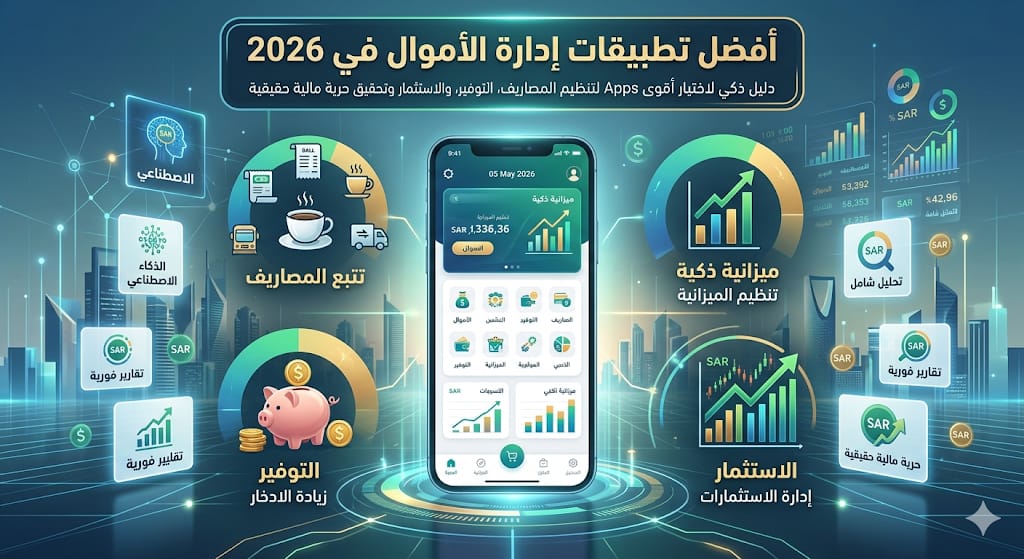
Best Money Management Apps in 2026 (Complete Guide to Achieving Full Financial Control)
The best money management apps in 2026 include Mint for beginners, YNAB for full budgeting control, PocketGuard for reducing spending, and Personal Capital for investment tracking. These apps help users track expenses, optimize savings, and build long-term financial systems using automation and AI-driven insights.
Introduction
In 2026, managing money is no longer optional — it’s a survival skill. The difference between someone stuck in a paycheck-to-paycheck cycle and someone building real wealth isn’t just income… it’s control.
With rising living costs and increasing financial complexity, using the right tools is critical. That’s where modern money management apps come in.
These apps allow you to:
- Track every dollar automatically
- Build a smart, flexible budget
- Identify wasteful spending
- Optimize saving and investing
But here’s the problem: There are hundreds of apps… and every app claims to be “the best.” This guide cuts through the noise and gives you a real, data-driven breakdown of the best money management apps in 2026 — based on performance, features, and real-world usability.
PART 1 — Understanding Money Management Apps
What Are Money Management Apps and Why Are They Essential in 2026?
Money management apps are digital tools designed to help you monitor income, track expenses, manage debt, and build savings — all in one place. In the past, people used spreadsheets or manual tracking, but in 2026, apps use artificial intelligence and automation to do this instantly and accurately.
These tools don’t just show numbers — they analyze behavior and give actionable insights to improve financial decisions. They reduce human error, save time, and create clarity in your financial life. Simply put: If you’re not using one — you’re managing money inefficiently.
Core Functionality:
- Account integration
- Data analysis
- Expense categorization
- Reporting dashboards
Budgeting Apps vs Investment Apps
Not all financial apps serve the same purpose — understanding the difference is critical. Budgeting apps focus on controlling spending, tracking expenses, and improving cash flow. Investment apps focus on growing wealth through stocks, ETFs, or retirement accounts.
Some apps combine both, but may lack depth in either category. Choosing the right type depends on your current financial goal.
Key Difference:
Budgeting = Control money / Investing = Grow money / Hybrid = All-in-one solution.
PART 2 — Best Money Management Apps in 2026
Mint (Best for Beginners)
Mint is one of the most popular money management apps in the U.S., especially for beginners. It offers a clean interface and automatically tracks expenses, making it ideal for users with little financial experience. It provides clear reports showing exactly where your money goes. The biggest advantage is that it’s free, making it accessible to everyone.
Strengths:
- Easy to use
- Free
- Automatic tracking
- Great for beginners
YNAB (Best for Full Control)
YNAB is not just an app — it’s a complete financial system. It follows a philosophy: “Give every dollar a job,” helping users control money with precision. It’s designed for people serious about financial improvement and long-term discipline. Although it’s paid, the long-term financial impact can be significant.
Why It Stands Out:
- Full budgeting control
- Structured system
- Strong financial discipline
- High long-term impact
PocketGuard (Best for Reducing Spending)
PocketGuard focuses on one key goal: preventing overspending. It shows how much money you can safely spend after bills and savings. It also helps identify and cancel unnecessary subscriptions. Perfect for users struggling with impulsive spending habits.
Key Features:
- Spending limits
- Subscription tracking
- Simple interface
- Smart alerts
Personal Capital (Best for Investment + Budgeting)
Personal Capital combines budgeting with investment tracking. It allows users to monitor net worth, analyze portfolios, and track performance. It offers powerful tools for fee analysis and long-term planning. Ideal for users who already invest and want deeper financial insights.
Advantages:
- Investment tracking
- Net worth dashboard
- Advanced analytics
- Professional-level tools
Goodbudget (Best Envelope System App)
Goodbudget is based on the classic envelope budgeting system, but in digital form. It allows you to allocate income into categories to prevent overspending. Great for users who prefer manual control over automation. Excellent for building disciplined financial habits.
Why Choose It:
- Simple system
- Manual control
- Budget discipline
- Family-friendly
PART 3 — How to Choose the Right App
Choose Based on Your Financial Goal
Selecting the right app depends entirely on your objective. If you’re a beginner, start simple with Mint. If you want full control, use YNAB. If your issue is overspending, PocketGuard is ideal. If you’re investing, Personal Capital is the best option.
Selection Rule:
Define your goal / Start simple / Upgrade later / Stay consistent.
Common Mistakes When Using Money Apps
Many people download apps… but never use them consistently. Others quit after a few weeks due to complexity or lack of discipline. The problem is not the tool — it’s the behavior. Success depends on consistency, not just technology.
Mistakes to Avoid:
- Lack of consistency
- Choosing complex tools
- Ignoring data
- Not tracking regularly
FAQ (People Also Ask)
What is the best money management app? It depends on your goal, but Mint and YNAB are top choices.
Are money apps safe? Yes, most use bank-level encryption and security systems.
Do I need a paid app? Not always, but paid apps offer more advanced features.
Can these apps help me save money? Yes — significantly if used consistently.
Conclusion
Managing money is no longer optional — it’s essential. The real difference isn’t how much you earn… It’s how well you manage what you earn. One powerful app + consistent use can completely transform your financial life within months. Start today — because the best time to take control of your money… is now.