Best 8 States to Buy Land with Low Taxes in the USA 2026 | Smart Real Estate Investment Guide
Business & Finance
هل تبحث عن شراء أرض في أمريكا بأقل ضرائب؟ اكتشف أفضل 8 ولايات منخفضة الضرائب مع تحليل كامل للتكاليف والعوائد في 2026 + دليل احترافي للاستثمار الذكي.
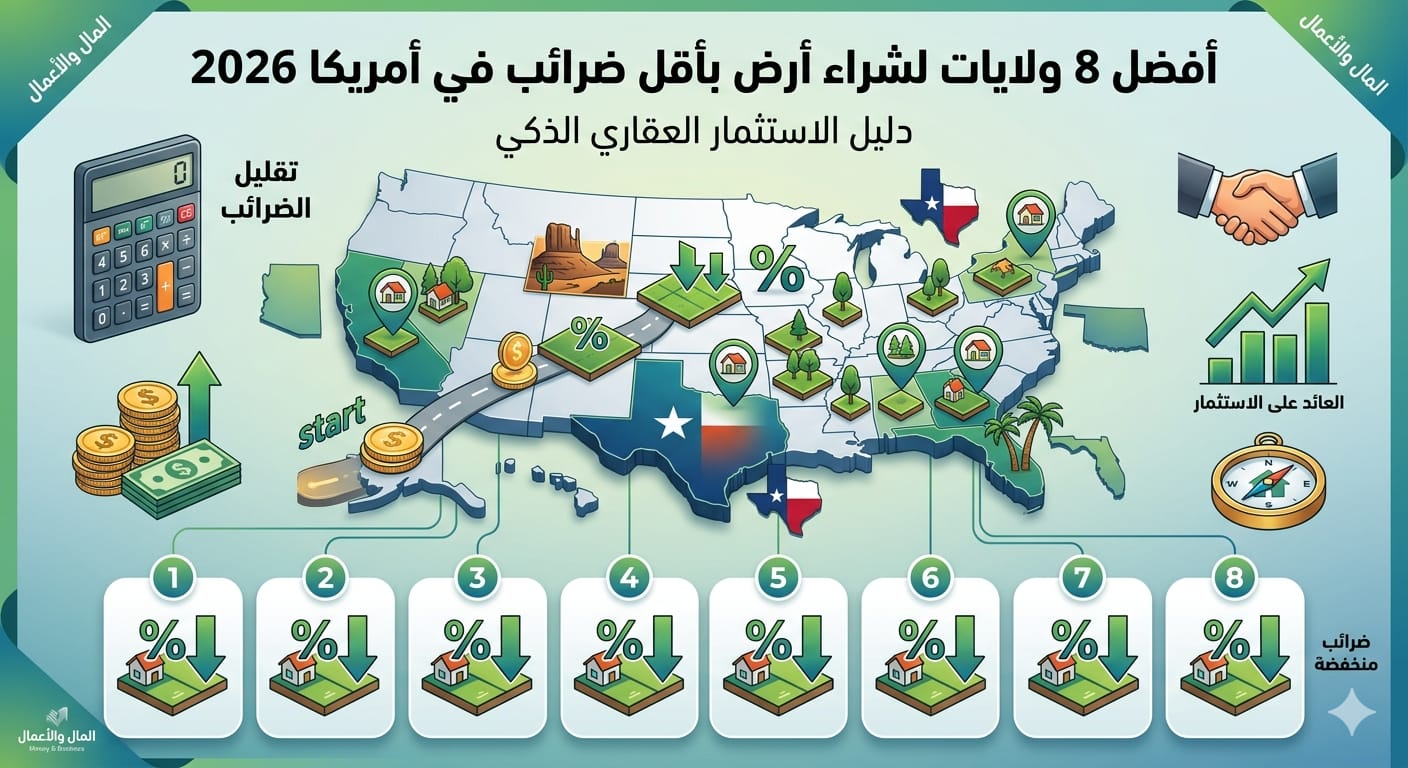
You can buy land in the United States with significantly reduced tax burdens by targeting states that offer no income tax and relatively low property taxes, such as Wyoming, Texas, and Florida. These locations provide a favorable investment climate, allowing you to minimize recurring costs while maximizing long-term returns. In 2026, smart investors are no longer chasing only cheap land—they are optimizing total ownership cost, including taxes, growth potential, and liquidity.
In 2026, real estate investment strategies have evolved far beyond simply buying low and selling high. Taxes now play a critical role in determining the true profitability of land ownership. High-tax states can significantly reduce your annual returns through property taxes and hidden costs. As a result, investors are shifting toward low-tax states that offer better long-term financial efficiency. Understanding this shift is essential if you want to build a sustainable real estate portfolio in the U.S.
There is no U.S. state where you can completely eliminate taxes when purchasing land. However, some states offer extremely low tax environments that feel “close to zero” compared to others. These include states with no income tax and reduced property tax rates. Additionally, certain counties offer exemptions, agricultural tax benefits, or development incentives. So the real strategy is not avoiding taxes entirely—but minimizing them intelligently.
These states were selected based on property tax rates, absence of income tax, land affordability, and economic growth trends in 2026. Each offers unique advantages depending on your investment goals—whether long-term holding, flipping, or development. Let’s break down the top 8 choices for smart investors:
Wyoming is widely considered the best state for minimizing tax burden. It has no state income tax and one of the lowest property tax rates in the U.S. Land prices are relatively affordable, especially in rural areas. However, population density is low, which may slow resale opportunities.
Alaska offers zero income tax and no statewide sales tax. Land can be extremely cheap in certain regions. There are also government programs supporting land ownership. However, climate and remoteness can be challenging factors.
Tennessee has no state income tax and relatively low property taxes. Land is affordable and economic growth is steady. It is ideal for beginner investors entering the U.S. market. The balance between cost and growth makes it a strong long-term option.
Texas is one of the largest and most dynamic real estate markets. There is no state income tax, though property taxes are moderate. Smaller cities offer excellent land investment opportunities. It is ideal for investors seeking scalability and fast growth.
The best state depends on your investment strategy. If you want ultra-low taxes, Wyoming and Alaska are top choices. If you want growth + liquidity, Texas and Florida are stronger. For balance, Tennessee and Arizona stand out. The key is aligning tax savings with growth potential.
Smart investors don’t just choose the right state—they optimize the entire process. Timing, location, and tax structure all matter. Using the right strategy can significantly increase ROI. Here are the most effective approaches used in 2026:
Buy in emerging : Pre-growth areas
Take advantage of local tax breaks
Choose farmland to reduce taxes
Plan for long-term investment
Many investors lose money : Due to simple mistakes. The biggest mistake is ignoring the true taxes. Some buy based solely on price. Not studying the market leads to losses. Avoiding mistakes = increasing profits.
Wyoming and Tennessee are among the best options due to low taxes and affordability.
No state is completely tax-free, but some have no income tax and low property taxes.
Yes, especially in fast-growing states with increasing population demand.
Yes, most states allow foreign ownership with minimal restrictions.
Choosing the right state is the foundation of successful real estate investing. Do not focus only on low prices—focus on total cost and future growth. Low taxes + strong demand = Highest return on investment. Start with a small investment and gradually expand your portfolio. In 2026, smart investment choices will be more important than the size of the investment.