How to Save Fuel While Driving and Significantly Reduce Car Fuel Consumption in 2026? Smart Secrets to Lower Gas Usage and Save Hundreds of Dollars Every Year
Business & Finance
How to Save Fuel While Driving and Reduce Car Fuel Consumption Significantly in 2026?
Discover the best ways to save fuel and reduce gasoline consumption using smart driving techniques and professional car maintenance strategies that lower costs and improve vehicle performance.
How to Save Fuel While Driving and Reduce Car Fuel Consumption Significantly?
Rising fuel prices across the United States and Europe have pushed millions of drivers to search for effective ways to reduce gasoline consumption and save money without sacrificing driving comfort or vehicle performance. Many people believe the only solution is buying an electric car or replacing their current vehicle with a hybrid model. However, the reality is that driving habits and daily routines have a greater impact on fuel efficiency than most drivers realize. Small mistakes repeated every day can cause a vehicle to consume extra fuel unnecessarily, while smart and simple habits can significantly reduce fuel consumption within just a few weeks.
Fuel-efficient driving is no longer just a collection of basic tips repeated across automotive websites. It has become a complete science used by global transportation companies and automotive experts to reduce operational costs and improve vehicle efficiency. Insurance companies are also analyzing driving behavior to determine premium costs because fuel-efficient drivers are often safer and less expensive to insure. This is why fuel-saving topics have become some of the most searched automotive keywords in American and European search engines, especially with inflation and rising living expenses.
In this article, you will discover the smartest ways to save fuel while driving, understand how daily habits affect gasoline consumption, learn the most common mistakes drivers make, and explore professional techniques that improve fuel efficiency and lower monthly driving expenses.
Why Does Fuel Consumption Increase Despite Modern Car Technology?
Despite major advancements in automotive engineering, many drivers still struggle with high fuel consumption. The real issue is not always related to the engine or the age of the vehicle, but rather how the car is driven every day. Modern manufacturers have developed more efficient engines and intelligent fuel-saving systems, but these technologies require proper driving behavior to achieve maximum efficiency.
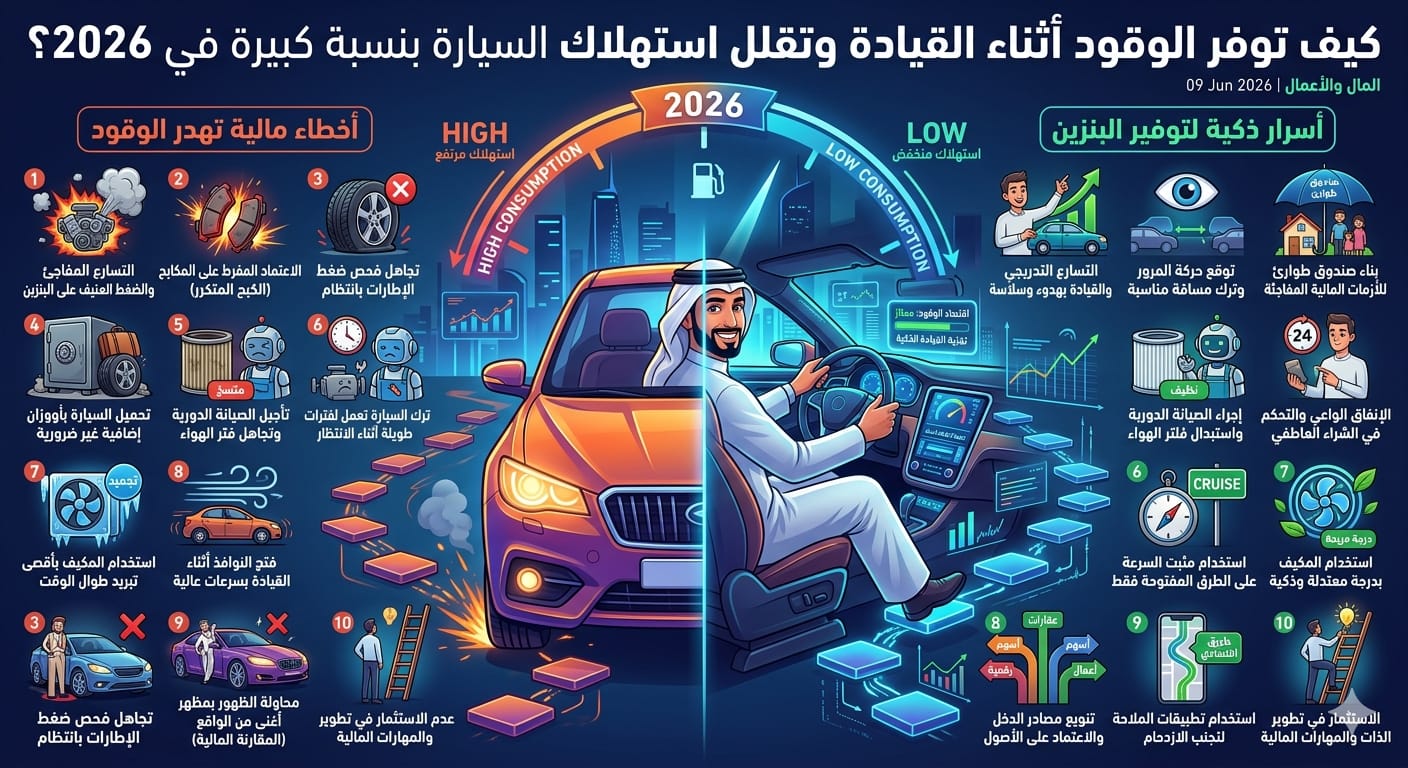
One of the biggest causes of increased fuel consumption is aggressive acceleration and sudden throttle pressure. When drivers press the gas pedal aggressively, the engine burns a larger amount of fuel in a short period of time to provide additional power. This habit is especially common in crowded cities, at traffic lights, or when drivers attempt to overtake other vehicles quickly. Unfortunately, this driving style rarely saves meaningful time while dramatically increasing fuel usage and engine stress.
High-speed driving is another major factor many drivers ignore. Most vehicles achieve optimal fuel efficiency at moderate and stable speeds. At higher speeds, aerodynamic drag increases significantly, forcing the engine to work harder to maintain movement. This is why several European countries enforce strict highway speed regulations to reduce emissions and improve fuel economy.
How Does Driving Style Directly Affect Fuel Consumption?
Driving behavior is often the single most important factor affecting fuel efficiency, sometimes even more than the type of vehicle itself. Calm drivers who maintain smooth and steady speeds can save a substantial amount of fuel compared to aggressive or impatient drivers. Large transportation companies invest heavily in eco-driving training because reducing fuel expenses saves millions of dollars annually.
The first essential rule is gradual acceleration. When drivers increase speed smoothly, the engine operates more efficiently and burns less fuel. Sudden acceleration, however, causes the fuel injection system to release large amounts of gasoline instantly. Automotive experts consistently recommend maintaining a smooth driving style, especially in urban environments.
Frequent braking is another major source of fuel waste. Every time a car stops and starts again, the engine requires additional energy to regain momentum. Anticipating traffic conditions and maintaining safe distances between vehicles helps reduce unnecessary braking and acceleration cycles.
Using Cruise Control to Save Fuel During Long Trips
Cruise control is one of the most effective modern technologies for reducing fuel consumption on highways. This feature allows the vehicle to maintain a constant speed without unnecessary fluctuations, enabling the engine to operate at optimal efficiency. Multiple American automotive studies have shown that cruise control can improve fuel economy by up to 10% in certain vehicles.
Using cruise control minimizes unnecessary acceleration and braking, helping reduce gasoline usage during long-distance travel. This is why logistics companies and professional drivers heavily rely on this technology to reduce operational expenses and improve route efficiency. However, cruise control works best on open highways rather than crowded city roads.
Does Air Conditioning Really Increase Fuel Consumption?
Air conditioning is one of the most debated topics among drivers, but scientific evidence clearly confirms that AC systems increase fuel consumption because the compressor draws power directly from the engine. When the air conditioner operates, engine load increases, resulting in additional gasoline usage.
In urban driving conditions, using air conditioning can increase fuel consumption by approximately 5% to 15%, depending on the vehicle type and weather conditions. On highways, however, opening windows may actually reduce efficiency more than using the AC because incoming air creates additional aerodynamic drag.
The smartest solution is using the air conditioner strategically. Drivers should avoid setting the system to maximum cooling unnecessarily and should park vehicles in shaded areas whenever possible to reduce cabin temperature and lower cooling demands.
When Is Opening Windows Better Than Using Air Conditioning?
At low city speeds, opening windows may help reduce fuel usage compared to continuously operating the air conditioner. However, at higher highway speeds, aerodynamic resistance becomes much stronger, making air conditioning the more fuel-efficient option. Modern vehicles are carefully engineered for aerodynamic performance. Driving with windows open at high speeds disrupts airflow and increases drag, forcing the engine to consume more energy.
The Importance of Tire Pressure in Reducing Fuel Consumption
Tire pressure is one of the most overlooked factors affecting fuel efficiency. Underinflated tires create more rolling resistance because a larger surface area contacts the road. This forces the engine to work harder and burn more fuel. According to reports from major American automotive organizations, low tire pressure can increase fuel consumption by more than 3%.
Maintaining manufacturer-recommended tire pressure improves fuel efficiency, vehicle stability, and tire lifespan. Properly inflated tires also reduce rolling resistance and improve braking performance and overall driving safety.
How to Choose Fuel-Efficient Tires
Some modern tires are specifically designed to reduce rolling resistance and improve fuel economy. These eco-friendly tires help vehicles move more efficiently and reduce engine workload. When purchasing new tires, drivers should pay attention to fuel efficiency ratings and choose manufacturer-approved sizes.
How Engine Maintenance Affects Fuel Consumption
Regular vehicle maintenance is one of the most powerful ways to reduce fuel usage and improve overall car performance. A properly maintained engine burns fuel more efficiently and generates power without unnecessary waste. Neglected engines, however, consume more gasoline even in newer vehicles.
The air filter plays a major role in combustion efficiency. A dirty air filter restricts airflow to the engine, causing incomplete combustion and reduced fuel efficiency. Replacing air filters regularly improves performance and lowers fuel consumption. Spark plugs are equally important because they control ignition quality inside the engine.
Best Engine Oils for Better Fuel Efficiency
Choosing the correct engine oil directly affects fuel economy. Modern low-viscosity oils reduce internal engine friction and improve operational efficiency. Automakers specify oil types based on engine design and climate conditions. Using the wrong oil may increase friction and fuel consumption.
Daily Mistakes That Increase Fuel Consumption
Many drivers unknowingly make simple daily mistakes that significantly increase gasoline usage over time. One common mistake is leaving the engine running unnecessarily while parked or waiting. Carrying unnecessary weight inside the vehicle is another issue. Heavy objects stored in the trunk increase engine workload, especially during city driving.
How Aggressive Driving Increases Fuel Costs
Aggressive driving is one of the most damaging habits for fuel economy and vehicle maintenance costs. Rapid acceleration, hard braking, and speeding place continuous stress on the engine. American studies show that aggressive driving may increase fuel consumption by up to 40% in urban environments.
Smart Daily Habits to Save Fuel
Building fuel-efficient driving habits is one of the best long-term strategies for reducing vehicle expenses. Drivers should begin moving shortly after starting the engine rather than allowing it to idle for extended periods. Combining daily errands into one trip also improves fuel efficiency.
Using Navigation Apps to Save Gasoline
Modern navigation apps are no longer just route tools. They have become powerful fuel-saving technologies that help drivers avoid traffic congestion and identify faster routes. Reducing traffic delays minimizes unnecessary stopping and acceleration, significantly lowering gasoline consumption.
The Future of Fuel-Efficient Vehicles and Fuel-Saving Technology
The automotive world is rapidly moving toward more efficient and environmentally friendly vehicles. American and European governments are enforcing stricter emissions regulations. Despite these innovations, smart driving habits will remain essential for reducing energy consumption. Even electric vehicles require efficient driving styles to maximize driving range.
Conclusion
Saving fuel is not determined solely by vehicle type or gasoline prices. It depends largely on driving behavior, maintenance quality, and everyday habits. Simple adjustments such as maintaining proper tire pressure, driving at stable speeds, and avoiding sudden acceleration can save hundreds of dollars annually while improving vehicle performance.
FAQ – Frequently Asked Questions?
Does driving slowly always save fuel?
Not always. Extremely slow driving may reduce engine efficiency. Moderate and stable speeds usually provide the best fuel economy.
Does air conditioning consume a lot of gasoline?
Yes, but the impact depends on the vehicle and weather conditions. Moderate AC usage is better than constantly using maximum cooling.
How often should tire pressure be checked?
Tire pressure should ideally be checked every two weeks and before long trips.
Does cruise control help save fuel?
Yes, especially on highways where it maintains consistent speeds and reduces unnecessary acceleration.
Does regular maintenance reduce fuel consumption?
Absolutely. Clean and properly maintained engines operate more efficiently and consume less fuel.
The Best Way to Save Fuel
The best way to save fuel while driving is maintaining a steady speed, avoiding sudden acceleration, checking tire pressure regularly, performing routine engine maintenance, and reducing unnecessary vehicle weight.