How to Start a Career in Cybersecurity Without a Degree in 2026 (Complete Beginner’s Guide to Breaking Into High-Paying Cybersecurity Jobs Without College)
Travel & Tourism
تعرف على كيفية دخول مجال Cybersecurity بدون شهادة في 2026 عبر خطة عملية لتعلم الأمن السيبراني، بناء المهارات، الحصول على أول وظيفة، وتحقيق دخل مرتفع بدون شهادة جامعية.
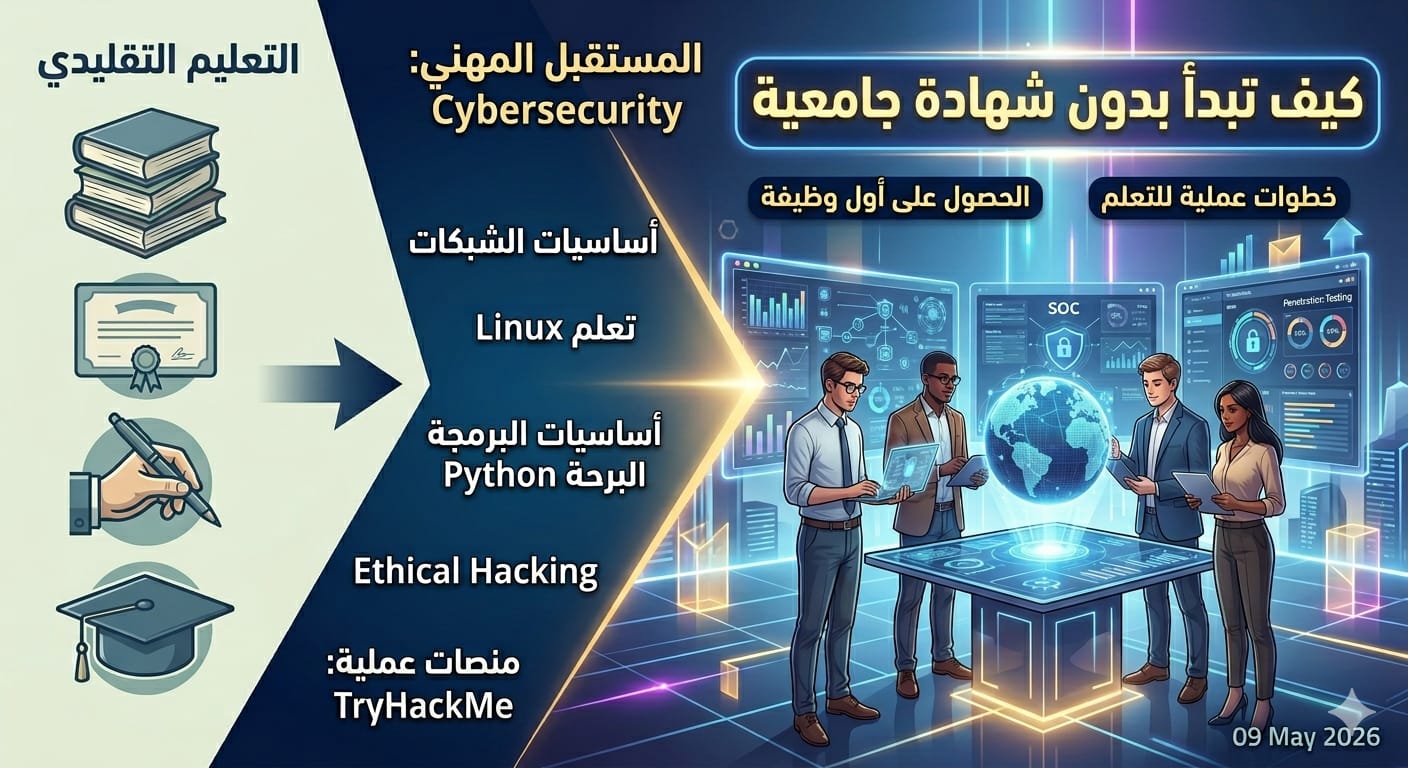
H1: How to Start a Career in Cybersecurity Without a Degree (The Ultimate 2026 Roadmap for Building a High-Income Cybersecurity Career From Scratch)
Cybersecurity has become one of the fastest-growing industries in the world, and a university degree is no longer the only path into the field. In 2026, companies care more about hands-on skills, real-world problem solving, certifications, and practical experience than traditional education alone. This shift has opened massive opportunities for beginners who want to enter a high-paying technology career without spending years in college.
Introduction: Why Cybersecurity Is One of the Best Careers Without a Degree
A few years ago, entering cybersecurity seemed impossible without a computer science degree, expensive certifications, or years of technical experience. Today, the landscape has completely changed. Cyberattacks are increasing every year, companies are losing billions of dollars due to data breaches, and organizations urgently need professionals who can secure systems, detect vulnerabilities, and respond to threats quickly.
This demand created one of the biggest skill shortages in the technology industry. As a result, employers are becoming more flexible about educational requirements. Instead of asking only for degrees, companies now focus on:
- Practical cybersecurity skills
- Hands-on labs and projects
- Certifications
- Real-world problem solving
- Technical understanding
This means someone with dedication, discipline, and a clear roadmap can build a cybersecurity career from home. In this guide, you will learn:
- How cybersecurity really works
- Which skills matter most in 2026
- The fastest learning path for beginners
- How to build experience without a job
- The best certifications for non-degree learners
- How to land your first cybersecurity job
- Future cybersecurity trends with AI
This is not theory. This is a practical blueprint for building a real cybersecurity career from scratch.
PART 1 — Understanding the Cybersecurity Industry
H2: What Is Cybersecurity and Why Is It Growing So Fast in 2026?
Cybersecurity is the process of protecting systems, networks, applications, and digital information from cyberattacks, unauthorized access, and data breaches. Many beginners think cybersecurity is only about “hacking,” but the field is much larger than that. Modern cybersecurity includes:
- Network security
- Cloud security
- Threat detection
- Malware analysis
- Ethical hacking
- Incident response
- Identity management
- Data protection
The reason the industry is growing rapidly is simple: the world is becoming fully digital. Banks, hospitals, governments, schools, and businesses all rely on digital infrastructure. Every connected system becomes a potential target for attackers. Because of this, cybersecurity is no longer optional. It has become a core business requirement.
H3: Why Companies Are Hiring Faster Than Ever
Cybercrime damages are increasing globally every year. Organizations face ransomware attacks, phishing campaigns, cloud breaches, and AI-powered cyber threats daily. This creates massive demand for cybersecurity professionals who can secure systems before attacks happen.
H3: Why Cybersecurity Is Perfect for Self-Taught Learners
Unlike many traditional careers, cybersecurity rewards skill more than academic credentials. If you can demonstrate real technical ability, employers often care less about degrees. Hands-on experience matters more than theory alone.
H3: Why Cybersecurity Salaries Are So High
There are not enough skilled professionals worldwide. This shortage allows cybersecurity specialists to command high salaries, remote opportunities, and strong career growth.
H2: How the U.S. Cybersecurity Job Market Changed
The American cybersecurity market has evolved dramatically over the past few years. Major companies increasingly focus on skill-based hiring rather than degree-based hiring. Organizations now hire candidates based on:
- Technical capability
- Portfolio projects
- Certifications
- Lab experience
- Communication skills
- Security mindset
Remote work also transformed the cybersecurity industry. Today, many entry-level cybersecurity jobs can be done remotely, allowing global candidates to compete internationally. This creates huge opportunities for motivated beginners worldwide.
H3: Most In-Demand Cybersecurity Roles
- SOC Analyst
- Security Analyst
- Penetration Tester
- Cloud Security Engineer
- Incident Response Analyst
- Threat Intelligence Analyst
H3: Why Cloud Security Is Exploding
As businesses move infrastructure to the cloud, cloud security demand continues growing rapidly. Companies need professionals who understand AWS, Azure, and cloud protection strategies.
H3: Why AI Is Changing Cybersecurity Hiring
Artificial intelligence is transforming both attacks and defense systems. Employers increasingly seek professionals who understand AI-assisted security tools and automation systems.
H2: Can You Really Start Cybersecurity Without a Degree?
Yes — but there is an important reality most people ignore. You do not need a university degree. But you absolutely need practical skills. Cybersecurity is performance-based. Employers want proof that you can secure systems, analyze risks, and solve technical problems.
That is proof usually comes from:
- Certifications
- Home labs
- GitHub projects
- Security writeups
- CTF solutions
- Scripts and tools
- Research notes
- Vulnerability reports
The field rewards people who practice consistently.
H3: What Replaces a Degree?
Instead of university credentials, you need:
- Technical understanding
- Networking knowledge
- Linux experience
- Security fundamentals
- Real-world labs
- Problem-solving ability
H3: What Makes Self-Taught Professionals Successful?
Successful learners usually have Discipline, Curiosity, Long-term consistency, Practical focus, Continuous learning habits, and Technical curiosity.
PART 2 — The Essential Skills You Must Learn
H2: Learn Networking Fundamentals First
Networking is the foundation of cybersecurity. If you do not understand how systems communicate, cybersecurity concepts become extremely difficult. Every cyberattack interacts with networks in some way. That is why networking knowledge is critical.
H3: Core Networking Concepts You Must Learn
- IP addresses
- DNS
- TCP/IP
- Routers and switches
- VPNs
- Firewalls
- Ports and protocols
- Subnetting
H3: Why Networking Knowledge Makes You Dangerous
Understanding network traffic helps you Detect suspicious behavior, Analyze attacks, Understand vulnerabilities, and Secure infrastructure.
H3: Best Way to Learn Networking Quickly
Start with beginner-friendly networking courses, then practice inside virtual environments. Hands-on learning is far more effective than memorization.
H2: Learn Linux Because Cybersecurity Depends on It
Linux is one of the most important technologies in cybersecurity. Most security tools, servers, and penetration testing environments rely heavily on Linux systems. That is why cybersecurity professionals spend significant time working in Linux terminals.
H3: Best Linux Distributions for Beginners
- Ubuntu
- Kali Linux
- Parrot OS
H3: Linux Skills You Must Master
- Terminal commands
- File permissions
- Networking commands
- User management
- Package installation
- Shell scripting
H3: Why Linux Skills Increase Your Job Opportunities
Companies heavily use Linux infrastructure. Professionals who understand Linux environments become much more valuable in the job market.
H2: Learn Basic Programming for Cybersecurity
You do not need to become a senior software engineer. But basic programming skills are extremely useful. Programming helps automate tasks, analyze data, and understand vulnerabilities.
H3: Best Programming Languages for Cybersecurity Beginners
- Python
- Bash
- JavaScript
H3: Why Python Is So Important
Python is widely used for Security automation, Script creation, Data analysis, Vulnerability testing, and Security tools.
H2: Learn Ethical Hacking Legally and Safely
Ethical hacking means testing systems legally to discover vulnerabilities before criminals exploit them. It is one of the most exciting areas in cybersecurity. However, legality and ethics are extremely important.
H3: Key Ethical Hacking Concepts
- Web security
- SQL Injection
- XSS
- Authentication flaws
- Network scanning
- Vulnerability assessment
H3: Why Ethical Hacking Skills Are Valuable
Organizations constantly need professionals who can identify weaknesses before attackers do. This makes penetration testing highly valuable.
H3: The Most Important Rule
Always practice inside legal environments. Never test systems without permission.
PART 3 — Building Experience Without a Job
H2: Create a Home Lab for Practical Training
One of the best ways to gain experience is building your own cybersecurity lab at home. A home lab allows you to safely practice attacks, defenses, monitoring, and analysis.
H3: What You Need for a Home Lab
- A computer
- VirtualBox or VMware
- Kali Linux
- Windows virtual machine
- Internet connection
H3: What You Can Practice Inside Your Lab
- Penetration testing
- Log analysis
- Network scanning
- Malware analysis
- Firewall configuration
H3: Why Labs Matter More Than Theory
Employers value practical ability. Labs prove you can apply cybersecurity concepts in realistic scenarios.
H2: Best Platforms for Cybersecurity Beginners
Online cybersecurity platforms provide structured hands-on learning. These platforms simulate real-world attacks and security scenarios.
H3: TryHackMe
TryHackMe is beginner-friendly and excellent for learning fundamentals step-by-step. It explains concepts clearly while offering guided labs.
H3: Hack The Box
Hack The Box is more advanced and highly respected in the cybersecurity community. It focuses heavily on practical hacking skills.
H3: PortSwigger Web Security Academy
One of the best free platforms for learning web application security and modern web vulnerabilities.
H2: Build a Strong Cybersecurity Portfolio
A portfolio demonstrates your capabilities to employers. It acts as proof of your technical knowledge and learning progress. Your portfolio should contain:
- Security writeups
- Home lab projects
- CTF solutions
- Scripts and tools
- Research notes
- Vulnerability reports
H3: Best Platforms for Publishing Your Work
- GitHub
- Medium
H3: Why Public Projects Help You Get Hired
Public projects increase visibility and credibility. Recruiters often search for candidates with practical proof of skills.
PART 4 — Getting Your First Cybersecurity Job
H2: Best Cybersecurity Certifications Without a Degree
Certifications help validate your skills and improve employability. Many employers trust certifications because they demonstrate technical understanding.
H3: CompTIA Security+
Security+ is one of the best beginner cybersecurity certifications. It covers Security fundamentals, Threat management, Risk analysis, and Network security.
H3: Certified Ethical Hacker (CEH)
CEH focuses on ethical hacking concepts and penetration testing methodologies. It is useful for offensive security career paths.
H3: Google Cybersecurity Certificate
A beginner-friendly certificate designed to introduce cybersecurity concepts practically.
H2: How to Build a Powerful Resume Without a Degree
Your resume should emphasize skills and projects instead of academic credentials.
H3: Focus on Technical Skills
Highlight abilities such as SIEM tools, Network security, Vulnerability scanning, and Incident response.
H3: Showcase Practical Experience
Even personal projects matter. Hands-on work demonstrates initiative and commitment.
H3: Use Industry Keywords
Include relevant cybersecurity terminology because recruiters and ATS systems scan resumes for technical keywords.
H2: How to Succeed in Your First Cybersecurity Interview
Cybersecurity interviews test both technical thinking and communication skills.
H3: Understand Concepts Instead of Memorizing
Interviewers prefer candidates who understand principles deeply. Memorized answers are easy to detect.
H3: Be Honest About Knowledge Gaps
Nobody knows everything. Employers value honesty and willingness to learn.
H3: Show Passion for Cybersecurity
Enthusiasm matters. Candidates who genuinely enjoy cybersecurity often stand out strongly.
PART 5 — Future of Cybersecurity Careers
H2: How Much Can You Earn in Cybersecurity?
Cybersecurity salaries are among the highest in the technology industry. Even entry-level roles can offer strong income potential.
H3: Highest-Paying Cybersecurity Fields
- Cloud security
- Security engineering
- Penetration testing
- Threat intelligence
- Application security
H3: Why Salaries Keep Rising
The global shortage of cybersecurity professionals continues increasing. Demand grows faster than supply.
H2: The Future of Cybersecurity With Artificial Intelligence
Artificial intelligence is transforming cybersecurity rapidly. AI tools help security teams analyze massive amounts of data and detect threats faster.
H3: Will AI Replace Cybersecurity Professionals?
No. AI will change workflows, but human expertise remains essential for strategic decisions and complex investigations.
H3: How AI Improves Security Operations
- Threat detection
- Log analysis
- Security automation
- Behavioral monitoring
H3: Most Valuable Future Skill
The ability to work alongside AI-powered cybersecurity tools will become extremely valuable.
FAQ (People Also Ask)?
H3: Can You Learn Cybersecurity Without a Degree?
Yes. Many professionals enter cybersecurity through certifications, labs, and practical experience instead of university education.
H3: What Is the Best Programming Language for Cybersecurity?
Python is one of the best beginner-friendly languages for cybersecurity automation and scripting.
H3: Is Cybersecurity Difficult for Beginners?
Cybersecurity requires patience and consistent practice, but beginners can learn successfully with structured study.
H3: How Long Does It Take to Learn Cybersecurity?
Most beginners can build foundational cybersecurity skills within 6–12 months of focused learning and practice.
The best way to start cybersecurity without a degree in 2026 is by learning networking, Linux, Python, and ethical hacking fundamentals, then building hands-on experience through home labs, cybersecurity platforms, certifications, and real-world projects. Companies increasingly prioritize practical skills over university degrees.
Conclusion
Cybersecurity is no longer limited to people with expensive university degrees. The industry now rewards Practical skill, Real-world experience, Continuous learning, Problem solving, and Technical curiosity. If you start today with a clear roadmap, consistent practice, and strong discipline, you can build valuable cybersecurity skills and land your first job within months. The cybersecurity industry is still growing rapidly. And the opportunity is still wide open for those willing to learn.